
Views: 0 Author: Site Editor Publish Time: 2026-07-30 Origin: Site


High-volume machining operations consistently face the compounding operational costs of single-use consumables, particularly in traditional brass wire electrical discharge machining. Manufacturers must balance the need for continuous, uninterrupted cutting cycles with strict budget controls, without compromising baseline part tolerances. Single-use wire systems often introduce frequent downtime for spool changes, high consumable expenses, and complex scrap handling systems. Transitioning to evaluating reusable wire systems—specifically utilizing molybdenum—serves as a viable structural alternative for continuous production. This guide examines the mechanics and operational trade-offs to determine if a Reusable Wire EDM Machine aligns with your shop’s specific manufacturing requirements. We will look at how continuous cutting drives production efficiency and changes the daily workflow on the shop floor.
Reusable wire architectures drastically reduce consumable overhead by cycling a single spool of high-tensile wire for extended durations, enabling true continuous cutting.
The integration of molybdenum wire offers superior tensile strength and heat resistance compared to brass, though it requires specific tension-control mechanisms to prevent breakage.
While highly efficient for roughing, high-volume production, and specific conductive materials, buyers must evaluate the trade-offs in ultimate surface finish compared to single-use, multi-pass brass systems.
Successful implementation requires modern CNC integration and strict adherence to dielectric fluid maintenance and wire tension calibration.
The reusable architecture relies on a closed-loop, reciprocating spooling mechanism. This mechanical design allows the wire to reverse direction and pass through the workpiece multiple times. The wire travels at high speeds, typically between 6 to 12 meters per second. This contrasts sharply with the slow, single-pass feed of traditional brass systems, which usually run at a sluggish 0.2 meters per second. The reversing drum winds the wire back and forth, utilizing limit switches and variable frequency drives to manage the rapid acceleration and deceleration required at the end of each stroke. This constant motion keeps the cutting zone active and prevents the wire from sitting in the spark gap long enough to melt.
Eliminating frequent wire spool changes directly increases machine uptime. It fully supports lights-out manufacturing shifts by removing the need for manual wire threading every few hours. When a shop runs a heavy roughing job on thick tool steel, the machine can run unattended overnight. The operator sets the parameters, ensures the dielectric tank is full, and lets the machine work. This continuous operation capability fundamentally shifts how production schedules are built, allowing shops to push high-volume jobs through faster without adding extra labor shifts.
Molybdenum possesses unique material properties that make it the industry standard for reusable systems. It has a melting point of 2,623°C and exceptional tensile strength exceeding 1900 MPa. A High Efficiency Molybdenum Wire EDM leverages these properties to withstand severe thermal degradation. The wire endures repeated electrical discharges during continuous cutting cycles without experiencing catastrophic yield failure.
Unlike brass, which vaporizes easily to help flush the kerf, molybdenum acts as a durable electrode that resists spark erosion. The high melting point means the wire maintains its structural integrity even when subjected to the intense heat of the plasma channel. This resistance to thermal shock allows the same section of wire to pass through the workpiece dozens of times. Operators must understand that while the wire is tough, it is not invincible. It will slowly lose diameter over time, requiring the CNC controller to compensate for the changing kerf width.
The high linear travel speed of a Fast Wire EDM Machine creates a hydrodynamic boundary layer of dielectric fluid. This high-velocity fluid movement carries debris out of the kerf more efficiently than slow-travel systems. As the wire rips through the cut at 10 meters per second, it drags the emulsion fluid with it, creating a mechanical flushing action that supplements the standard nozzle flushing. This is particularly effective in thick workpieces where standard flushing struggles to reach the center of the cut.
This rapid movement also provides a significant cooling effect on the wire electrode itself. Rapid cooling prevents localized thermal stress, extending the operational life of the molybdenum spool. The fluid absorbs the heat generated by the spark and carries it away before the wire can reach its melting point. If the wire speed drops or the fluid flow is interrupted, the wire will snap almost instantly due to thermal overload.
Maintaining consistent wire tension during rapid directional reversals is critical. Machines utilize pneumatic tensioning, weight-drop systems, or electromagnetic brakes to manage these dynamic forces. When the drum reverses direction, the wire experiences a momentary drop in tension followed by a sharp spike. The tensioning system must absorb this shock to prevent the wire from jumping off the guide wheels or snapping.
Modern guide systems mitigate wire vibration and backlash. Ruby guide wheels and carbide power feed blocks maintain kerf consistency over hours of continuous operation. The guide wheels must spin freely and be perfectly aligned. Any drag on the bearings will cause the wire to slip, creating flat spots on the molybdenum and leading to premature failure. Operators must clean and inspect these guides daily to ensure the wire path remains true.
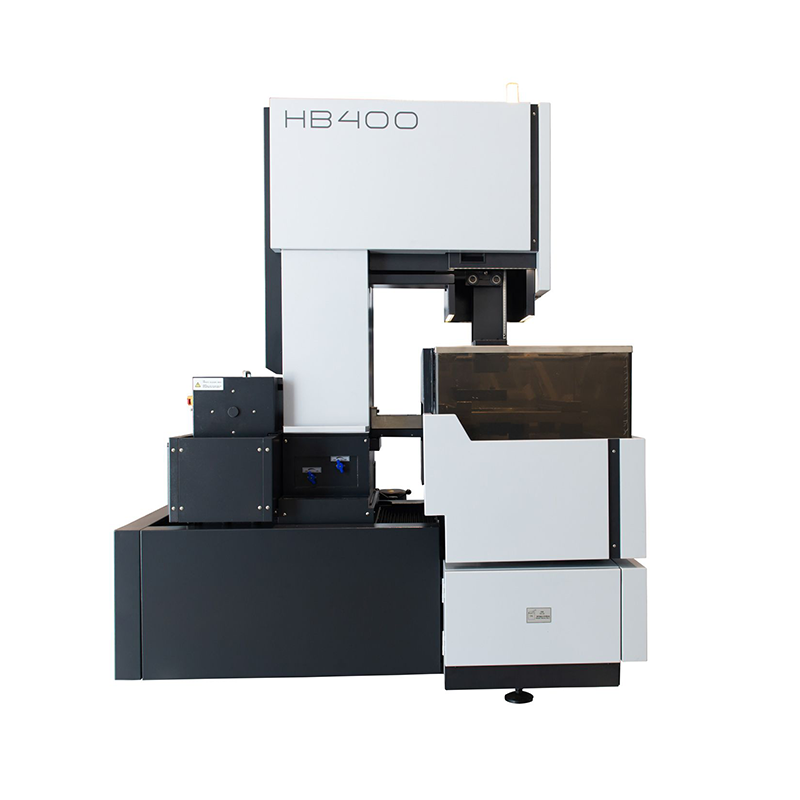
Adopting reusable systems requires establishing baseline success criteria. You must identify the threshold where consumable savings outweigh the need for ultra-fine surface finishes. Understanding this balance ensures the technology fits your production goals. Shops that primarily cut extrusion dies, stamping tools, or large roughing plates will see immediate benefits. Those cutting aerospace components with strict recast layer limits may need to keep their brass machines for finishing work.
Reusable systems drastically reduce wire purchasing, storage, and disposal costs. A single spool of molybdenum can last up to 40 to 50 cutting hours. In contrast, brass spools deplete in mere hours. This architecture also yields secondary savings in operator labor. Staff spend less time on threading and spool management, allowing them to focus on quality control and machine setup.
The logistics of handling brass wire can be a burden. Shops have to store pallets of heavy spools, manage the recycling of the used wire, and constantly monitor the machines to ensure they don't run out mid-cut. Molybdenum systems eliminate this headache. A small box of molybdenum spools can keep a machine running for months. The reduction in physical handling and storage space frees up resources for other shop floor activities.
Micro-discharge spark erosion causes slight, predictable reductions in wire diameter over time. This wear impacts dimensional accuracy if left unmanaged. However, a Precision Molybdenum Wire EDM utilizes advanced multi-cut technology to overcome this. The process involves aggressive roughing followed by multiple trim passes with reduced spark energy.
Modern reusable systems can achieve surface finishes down to Ra 0.8 µm. Depending on application requirements, secondary finishing operations like grinding or polishing may still be necessary. The multi-pass approach works by leaving a small amount of stock during the roughing pass. The machine then reverses the cutting direction, lowers the power, and skims the surface to remove the recast layer and improve the finish. This technique requires a rigid machine frame and precise wire positioning to be effective.
Feature |
Reusable Molybdenum Wire EDM |
Single-Use Brass Wire EDM |
|---|---|---|
Wire Speed |
6 - 12 meters per second |
0.1 - 0.3 meters per second |
Consumable Lifespan |
40 - 50 hours per spool |
Depleted continuously |
Dielectric Fluid |
Water-soluble emulsion |
Deionized water |
Optimal Use Case |
High-volume roughing, thick parts |
Ultra-high precision finishing |
Wire Material |
Molybdenum |
Brass or Zinc-coated Brass |
Flushing Mechanism |
Hydrodynamic drag + Nozzle |
High-pressure Nozzle only |
Evaluating technological components is essential when shortlisting equipment vendors. The right features determine the long-term reliability of the machine. You need to look past the basic specifications and examine how the machine handles the realities of continuous cutting. The rigidity of the casting, the quality of the linear guideways, and the responsiveness of the servo motors all play a role in the final part quality.
Advanced CNC controllers are necessary for managing continuous cycles. A modern CNC Wire Cutting EDM Machine performs real-time parameter adjustments. It provides automatic offset compensation to account for wire wear. Software features automate cutting speed and discharge frequency adjustments based on material thickness and cornering geometry. Pitch error compensation and anti-electrolysis power supplies prevent cobalt depletion in carbide cutting.
The controller must track the exact amount of time the wire has been cutting and calculate the expected diameter reduction. It then adjusts the tool path offset dynamically to ensure the final dimensions remain within tolerance. When cutting sharp corners, the CNC must slow down the feed rate and adjust the flushing pressure to prevent wire lag and corner washout. These intelligent features separate high-end production machines from basic entry-level models.
Reusable systems utilize specialized, water-soluble dielectric emulsions rather than standard deionized water. These oil-in-water concentrates provide crucial lubrication for the reciprocating guide wheels. Proper filtration is mandatory to remove the high volumes of swarf generated during high-speed cutting. Multi-stage sedimentation systems and paper cartridge filters maintain fluid integrity.
The emulsion fluid serves a dual purpose. It acts as the dielectric medium for the spark gap and as a lubricant for the mechanical components in the wire path. Maintaining the correct concentration ratio is vital. If the mixture is too thin, the guide wheels will wear out prematurely. If it is too thick, the cutting speed will drop, and the kerf will become clogged with debris. Operators must use a refractometer daily to check the fluid concentration and adjust it as needed.
Maintenance Task |
Frequency |
Action Required |
|---|---|---|
Check Fluid Concentration |
Daily |
Use refractometer, adjust water/oil ratio. |
Inspect Guide Wheels |
Weekly |
Check for V-track grooving, ensure smooth rotation. |
Clean Conductive Blocks |
Weekly |
Remove carbon buildup, index to a fresh surface. |
Replace Filter Cartridges |
Monthly |
Swap out paper filters when pressure gauge indicates clogging. |
Calibrate Wire Tension |
Monthly |
Use tension meter to verify pneumatic or mechanical settings. |
Transitioning to reusable wire systems introduces hidden operational challenges. Identifying these risks allows you to engineer them out of the process. Shops that fail to adapt their maintenance routines will experience frequent wire breaks and poor surface finishes. The technology requires a different mindset compared to running brass wire machines.
Preventative maintenance is non-negotiable for reversing drums, conductive blocks, and guide wheels. Guide wheel grooving, or V-track wear, is a primary risk factor. Establish a strict replacement schedule for these components. Failing to replace worn guides leads to accuracy degradation and severe wire wobble.
The conductive blocks transfer the electrical current to the moving wire. Over time, the wire cuts a groove into the block, reducing the contact area and causing arcing. Operators must regularly index the blocks to expose a fresh surface. Once all surfaces are grooved, the block must be replaced. Ignoring this maintenance step will result in unstable cutting conditions and increased wire breakage.
Setting up molybdenum wire tensioning requires a specific learning curve. Operators must also manage specialized emulsified dielectric fluids, monitoring concentration ratios and pH levels carefully. Establish protocols for tracking the wire's cumulative cutting area. Proactively replace the wire before tensile fatigue leads to mid-cut breakage.
Threading a molybdenum spool onto the reversing drum takes practice. The wire must be laid down evenly without overlapping, similar to winding a fishing reel. If the wire is crossed on the drum, it will bind and snap during operation. Training programs should focus heavily on this setup procedure, as well as the proper techniques for aligning the guide wheels and setting the initial tension.
Ensure the wire is threaded through all ceramic guides and tensioning pulleys correctly.
Secure the wire ends to the reversing drum using the designated clamping screws.
Manually rotate the drum to verify the wire lays flat and does not cross over itself.
Engage the tensioning system and check the wire alignment with a dial indicator.
Run a short test program in the air to verify smooth drum reversal before starting the cut.
Capital equipment buyers must weigh specific factors when comparing reusable molybdenum systems with single-use brass systems. The decision hinges on your primary production outputs. You need to look at the types of parts you run, the materials you cut, and the tolerances your customers demand.
Reusable wire systems excel in specific applications. Ideal use cases include extrusion dies, large-scale conductive roughing, thick workpieces, and metal stamping dies. They perform exceptionally well on materials where thermal damage is less critical. If your shop spends days roughing out large blocks of D2 tool steel, a molybdenum machine will drastically cut your consumable costs and improve your throughput.
Conversely, they are non-ideal for medical device manufacturing requiring sub-micron tolerances. Aerospace components requiring zero recast layers and micro-machining with wire diameters under 0.1 mm should utilize traditional brass systems. The multi-pass capabilities of modern molybdenum machines are impressive, but they cannot match the absolute precision of a high-end brass machine running fine wire in a temperature-controlled room.
Reusable wire EDM technology delivers a highly effective solution for continuous cutting applications. It thrives where throughput and operational efficiency take precedence over extreme sub-micron precision. To successfully integrate this technology, take the following steps:
Request a test cut using your specific material and geometry to verify surface finish acceptability.
Audit your shop floor to ensure adequate space and infrastructure for emulsion-based dielectric filtration units.
Develop a strict preventative maintenance schedule focusing on guide wheels and tensioning drums.
Train your machine operators specifically on molybdenum wire tensioning and fluid concentration management.
A: A standard molybdenum spool typically handles 30,000 to 50,000 square millimeters of cutting area. In practical terms, this translates to roughly 40 to 50 hours of continuous operational cutting before tensile failure or unacceptable diameter reduction requires replacement.
A: The primary differences lie in wire speed and direction. Fast wire systems use a reciprocating high-speed motion (6-12 m/s) rather than a slow spool-to-waste feed. They also use water-soluble emulsions instead of deionized water, prioritizing roughing speed over ultra-fine finishing.
A: Yes. Modern controllers track cutting time, distance, and discharge pulses. They automatically adjust spark-gap offsets to maintain dimensional accuracy as the molybdenum wire diameter gradually wears down during continuous use.
A: Standard conductive materials, tool steels like D2 and H13, tungsten carbide, and titanium are excellent candidates. Thick workpieces that benefit from high-speed, continuous roughing also see significant efficiency gains.
A: While multi-pass molybdenum EDM achieves competitive precision (down to Ra 0.8 µm), the surface texture differs from multi-pass brass EDM. Depending on strict application requirements, secondary grinding or polishing may still be necessary.
A: Wire breakage is typically caused by improper tensioning, degraded guide wheels, or poor flushing. Accumulation of carbon and swarf in the kerf, or exceeding the wire's thermal and fatigue limits, will also cause mid-cut failure.
 HB400
HB400  HB600
HB600  HB800
HB800  LA350A
  LA500A
  LA800
LA800  EB450
EB450  EA500A
  EB650N
  DS703C
  SK450
SK450 


