
Views: 0 Author: Site Editor Publish Time: 2026-10-28 Origin: Site


Machine downtime bleeds precision manufacturers dry. Thousands of dollars vanish daily when a critical machine stops running. While shop managers obsess over software updates and high-speed servos, a hidden culprit often goes unnoticed. Cheap electrodes cause unstable burns. This oversight destroys internal machine components at a terrifying rate.
As engineers on the shop floor, we constantly see the aftermath of poor tooling choices. Let us break down exactly which metallurgical choices prevent premature deterioration. This knowledge protects your capital equipment and directly drives higher profitability.
Graphite remains the optimal choice for minimizing mechanical wear. Its low density significantly reduces the physical strain on Z-axis servo motors and ball screws during continuous high-speed oscillation.
Copper-Tungsten provides the highest durability for machining hardened metals. It prevents short circuits and erratic sparking, which act as the primary causes of premature generator failure.
Electrode degradation directly correlates with machine health. Excessive debris from substandard materials overloads dielectric filtration systems and induces cavitation in fluid pumps.
Material matching is absolutely critical. Aligning the electrode metallurgy with the workpiece is the most empirically proven method to stabilize spark erosion and maximize equipment return on investment.
To truly grasp how tooling materials affect machine longevity, we must examine the physical mechanics happening inside the dielectric tank. Spark erosion involves thousands of controlled electrical discharges per second. These sparks jump across a microscopic gap between the electrode and the workpiece. The intense thermal energy melts and vaporizes the target metal, while the dielectric fluid flushes the microscopic particles away.
Unlike traditional CNC milling operations where a carbide endmill physically cuts into steel, the EDM electrode never makes physical contact with the workpiece. However, it still acts as the cutting tool and is subjected to severe thermal degradation. Every single spark that removes metal from the cavity also strips a microscopic amount of material from the electrode itself.
Consequently, the condition of the electrode directly influences the internal components of a Die Sinking EDM Machine. The equipment power generator, servo motors, and dielectric flushing systems are designed to constantly monitor and adapt to the state of the spark gap. When an electrode degrades rapidly or unevenly, the gap becomes highly unstable. This instability forces the machine control system into overdrive. It must constantly adjust voltage parameters and Z-axis positioning. Over time, this continuous overcompensation leads to the premature failure of expensive electronic boards and mechanical drives.
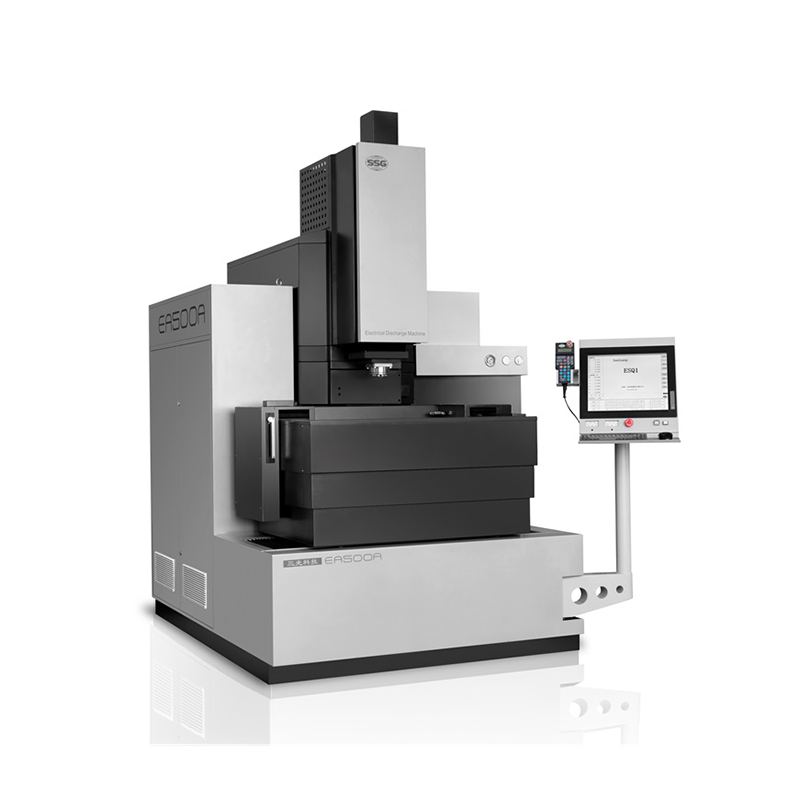
Recent industry analysis reveals a massive shift in precision manufacturing strategy. As tolerance requirements in sectors like aerospace and electric vehicle manufacturing become stricter, facility managers are realizing a hard truth. The hidden costs of machine degradation far outweigh the upfront savings of cheap tooling.
There is a clear movement away from commoditized extruded graphite toward engineered composite materials. Modern automated shop floors require predictable wear rates to sustain lights-out manufacturing. Unpredictable tool degradation bottlenecks automated cells and forces operators to intervene manually. By investing in premium metallurgy, manufacturers are not just buying better surface finishes; they are purchasing process stability and extending the operational lifecycle of their multi-axis equipment.
Selecting the correct tooling material requires a delicate balance of electrical conductivity, thermal resistance, and physical weight. Below is an objective analysis of the primary materials utilized on the shop floor and their direct impact on machine lifespan.
Graphite is widely utilized in die sinking applications due to its unique thermal properties. Unlike metals that turn into a liquid state under extreme heat, graphite sublimates. It transitions directly from a solid to a gas at temperatures exceeding 3,600 degrees Celsius. Furthermore, it is highly machinable, allowing programmers to mill incredibly complex geometries with ease. Ultrafine grain graphite offers superior corner wear resistance and excellent surface finish capabilities.
The primary advantage of graphite regarding machine health is its minimal mass. Graphite is exceptionally lightweight compared to metallic alternatives. During a cavity burn, the Z-axis servo motor must constantly oscillate to flush debris from the cut. A heavy copper block places immense inertial stress on the servo drives, linear guideways, and ball screws. By utilizing lightweight graphite, operators significantly reduce mechanical fatigue on the Z-axis, thereby extending the life of the machine motion control systems.
Electrolytic copper serves as the traditional standard for achieving highly refined, mirror-like surface finishes. This is particularly true when executing final passes on steel alloys. It possesses excellent electrical and thermal conductivity, melting at approximately 1,085 degrees Celsius. Because it is highly conductive, it allows for highly efficient energy transfer across the spark gap.
From an equipment preservation standpoint, copper generates a highly stable direct current arc. Stability in the spark gap is absolutely crucial for the health of the power generator. Erratic sparking causes rapid fluctuations in electrical resistance. This forces the generator circuit boards and insulated-gate bipolar transistors to manage sudden, violent voltage spikes. The stable arcing provided by high-quality copper mitigates these electrical surges, thereby reducing thermal and electrical fatigue on the power supply units.
Copper-Tungsten is a pseudo-alloy created through advanced powder metallurgy. It is engineered specifically for punishing applications where neither pure copper nor standard graphite can survive the thermal environment. This composite material marries the exceptional electrical conductivity of copper with the extreme heat resistance of tungsten. This makes it highly resistant to mechanical deformation under intense thermal loads.
When machinists attempt to cut exceptionally hard materials like tungsten carbide, standard electrodes degrade almost instantly. This rapid deterioration releases massive amounts of conductive sludge into the dielectric tank. Copper-Tungsten exhibits a remarkably low wear ratio, producing minimal particulate matter. Less debris means significantly less strain on the dielectric fluid pumps and extends the operational life of the paper filtration cartridges. By maintaining clean dielectric fluid, this material indirectly protects the machine from destructive secondary arcing and pump impeller cavitation.
Pure tungsten is generally reserved for highly specialized micro-machining applications, such as medical device manufacturing or aerospace components. In these fields, dimensional stability is paramount. Tungsten boasts the highest melting point of all metals at 3,422 degrees Celsius. While it is extremely rigid and difficult to mill into complex shapes, its thermal resilience is unmatched.
During micro-spark erosion, even a microscopic deformation of the tool edge causes immediate short circuits. When a short circuit occurs, the CNC servos must instantly retract the Z-axis to break the circuit and clear the gap. Tungsten resistance to thermal deformation ensures a perfectly consistent spark gap. This stability prevents the dreaded hunting phenomenon, ensuring the mechanical drives do not have to execute thousands of violent micro-retractions per minute. This saves the thrust bearings from excessive micro-vibrational wear.
Material | Melting/Sublimation Point | Conductivity Rating | Wear Resistance | Impact on Machine Strain |
|---|---|---|---|---|
Graphite | ~3,600°C Sublimates | Moderate | High | Lowest mechanical strain due to lightweight |
Copper | 1,085°C | Very High | Moderate | Low electrical strain due to stable arc |
Copper-Tungsten | Composite dependent | High | Very High | Lowest filtration strain due to minimal debris |
Tungsten | 3,422°C | Moderate | Extreme | Protects servos in micro-machining |
Utilizing an incorrect or low-grade material acts as a primary catalyst for equipment deterioration. This damage manifests across three distinct internal systems.
The EDM generator is meticulously designed to output controlled, high-frequency pulses of electrical energy. When a tooling material has a low melting point or poor conductivity, the gap becomes rapidly polluted with unevenly melted slag. This leads to direct current arcing. This is a dangerous condition where the spark fails to extinguish during the off-time, creating a continuous and damaging short circuit. This erratic behavior forces the power supply to constantly spike and drop its current output. Over months of operation, this severe thermal cycling degrades the insulated-gate bipolar transistors and printed circuit boards within the generator cabinet.
A critical function of the equipment is gap voltage monitoring. If the sensors detect excessive debris or an impending short circuit, the controller commands the Z-axis servo motor to instantly retract the tool, flush the area, and re-approach. This rapid oscillation is known on the shop floor as hunting. Poor materials that wear rapidly create a constant stream of debris, causing the equipment to hunt continuously. This erratic, high-frequency up-and-down motion accelerates the wear of the Z-axis ball screw, thrust bearings, and servo motor encoders. Eventually, this leads to a complete loss of machining precision.
Electrode deterioration generates microscopic particles known as swarf. Substandard materials do not break down cleanly. Instead, they fracture into larger, irregular particulates. This heavy sludge sinks into the dielectric tank, rapidly clogging the paper or synthetic filter cartridges. As filters clog, the dielectric fluid pump must work against steadily increasing backpressure. This causes the pump motor to run hot and can induce cavitation. Cavitation is a destructive phenomenon where vapor bubbles form and violently collapse inside the pump, physically eroding the brass impellers and internal housings.
When evaluating tooling options to protect your Spark Erosion CNC Die Sinking EDM, buyers and manufacturing engineers must look beyond the price tag. You need to analyze specific metallurgical properties that dictate process stability. Modern machines from industry leaders are built to achieve remarkable specifications. For example, advanced equipment can achieve surface roughness below 0.2 micrometers and maintain ultra-low tool wear under 0.1 percent. However, these parameters are impossible to reach with cheap graphite.
Higher electrical conductivity allows the energy from the generator to travel through the tool with minimal resistance. When resistance is high, the tool itself absorbs the energy and heats up, rather than transferring that cutting power to the workpiece. High-conductivity materials, such as pure electrolytic copper, ensure that the thermal energy is concentrated exactly where it belongs at the spark gap. This efficiency prevents the tool holder and the machine spindle from absorbing radiant heat, which could otherwise cause thermal expansion and mechanical misalignment in the machine head during long unattended burns.
The ability of a material to maintain its structural integrity under extreme heat dictates the stability of the entire process. Materials with low melting points will quickly deform at the corners and edges during aggressive roughing passes. This deformation alters the surface area of the cut, forcing the machine adaptive control systems to continuously recalculate the optimal voltage and feed rate. Conversely, materials like graphite and tungsten maintain their crisp geometry. This allows the computer numerical control to run smoothly on predictable, stable algorithms.
The wear ratio is defined as the volume of tool material lost compared to the volume of workpiece material removed. Corner wear is particularly damaging because it fundamentally changes the shape of the cavity. If a cheap graphite block has a high corner wear ratio, the operator is forced to halt the machine, swap out the tool, and program secondary finishing passes with brand-new electrodes. This not only wastes physical material but unnecessarily adds hours of run-time to the equipment, accelerating the depreciation of all moving parts.
The longevity of your capital equipment is highly dependent on the synergy between the tooling and the workpiece metal. Mismatching these elements guarantees process instability and invites mechanical strain.
For standard tool steels like H13, D2, and P20, graphite and copper remain the standard choices. Graphite is highly preferred for roughing large cavities in steel due to its massive material removal rate and low weight, protecting the Z-axis guideways. Copper is then deployed for the final finishing passes to achieve a superior surface finish without requiring excessive generator power.
In contrast, machining tungsten carbide is notoriously difficult. Attempting to spark erode carbide dies with standard graphite or pure copper will result in catastrophic tool wear. This immediately fills the gap with conductive debris and causes violent direct current arcing. Copper-Tungsten is mandatory for carbide applications. Its high density and thermal resistance allow it to penetrate the carbide matrix while maintaining gap stability, thereby protecting the generator from continuous short-circuit overloads.
Titanium alloys like Ti-6Al-4V and Inconel present unique challenges due to their inherently poor thermal conductivity. The heat generated by the spark erosion process does not dissipate easily into the workpiece. Instead, it reflects backward into the tool. In these demanding scenarios, high-density ultrafine grain graphite is utilized. It can withstand the reflected heat without degrading, keeping the gap clear and preventing the equipment from entering a continuous fault state.
While metallurgical selection forms the foundation of equipment longevity, operational best practices must be strictly implemented on the shop floor.
Even the most premium Copper-Tungsten block will fail if the dielectric flushing is inadequate. Flushing removes the swarf from the cut, preventing the debris from acting as a secondary conductor. Operators must utilize a combination of pressure flushing and suction flushing to ensure a laminar flow of clean dielectric. Proper flushing drastically reduces the reliance on the Z-axis servo for gap clearing, thereby saving years of mechanical wear.
Furthermore, machine operators must meticulously calibrate the generator settings to match the specific tool and workpiece combination. The on-time dictates the duration the spark is active. Longer on-times increase material removal but heighten tool wear. The off-time is the duration between sparks. Sufficient off-time is absolutely critical. It allows the dielectric fluid to flush the gap and restore its insulative properties. Setting the off-time too low guarantees destructive arcing.
Finally, preventative maintenance is non-negotiable. Dielectric filters must be replaced based on pressure gauge readings, not just a visual inspection of the tank. Operating with clogged filters forces contaminated fluid through the system, acting as a liquid abrasive that destroys pump seals and servo valves.
When managing a precision manufacturing facility, procurement departments and engineering teams often find themselves at odds regarding tooling budgets. The upfront cost of premium materials can be significantly higher than standard commercial-grade alternatives. However, evaluating this expense in isolation is a critical operational error. To understand the true financial impact, operators must analyze the total cost of ownership associated with running precision die sinking EDM equipment. You must factor in machine wear, maintenance intervals, and unplanned downtime.
Upgrading your tooling is not merely about achieving a superior surface finish on the workpiece. It is a strategic investment in the mechanical and electrical longevity of your equipment. Poor-quality materials degrade rapidly, transferring operational stress directly to the machine most sensitive internal components.
To illustrate the financial viability of upgrading, consider a facility tasked with machining hardened tool steel cavities. The team has the option to use standard-grade graphite or invest in premium ultrafine grain graphite. While the premium option may cost 25 percent more upfront, its high sublimation point and structural density result in a significantly lower wear ratio.
Metric Variable | Standard Grade Graphite | Premium Ultra-Fine Graphite | Impact on Machine Health |
|---|---|---|---|
Initial Material Cost | Baseline | Baseline + 25% | N/A |
Electrode Wear Ratio | High | Low | High wear increases debris generation. |
Filter Replacement Cycle | Every 200 operational hours | Every 400 operational hours | Frequent changes indicate pump strain. |
Z-Axis Servo Adjustments | High constant hunting | Low stable spark gap | Excessive movement causes mechanical fatigue. |
Generator Stress Level | High erratic arcing | Low stable discharge | Protects expensive power supply units. |
In a standard yearly operational cycle, the use of premium materials can reduce dielectric filter consumption by half. More importantly, by maintaining a stable environment, the machine Z-axis servo motors do not have to constantly hunt. This reduction in mechanical oscillation extends the life of the ball screws and linear guideways. When factoring in the avoidance of a single major mechanical or electrical failure, the return on investment of premium tooling often exceeds 300 percent within the first year.
Choosing the correct electrode material serves as your first line of defense in protecting capital equipment. It prevents devastating internal damage, reduces mechanical fatigue on servo systems, and saves countless thousands in unbudgeted operational costs. Always take the time to match the specific metallurgical properties to your workpiece material. This straightforward step extends the machine lifespan significantly.
If you are looking to upgrade your manufacturing floor with reliable, high-performance EDM machines, we highly recommend exploring the advanced solutions offered by SSG EDM. Their equipment is engineered to handle premium materials efficiently, ensuring maximum precision and decades of operational stability. Audit your current tooling choices today, step away from commoditized materials, and secure higher profitability for your shop.
Graphite is the most widely utilized material in the industry. This is primarily due to its exceptional balance of machinability, cost-effectiveness, and thermal resistance. Unlike metals that melt, graphite undergoes sublimation. This high thermal threshold allows it to maintain precise geometries even during aggressive roughing processes. From a machine longevity perspective, graphite is highly advantageous because of its low density. It is significantly lighter than metallic alternatives. This lightweight nature reduces the mechanical payload on the machine Z-axis spindle, servo motors, and ball screws, minimizing inertial stress and preserving overall positional accuracy.
Electrode wear does not cause immediate catastrophic damage. However, chronic use of rapidly degrading materials will cause cumulative and permanent degradation of internal components over time. The damage occurs through two primary mechanisms: mechanical fatigue and electrical stress. Mechanically, an unevenly worn tool creates an inconsistent gap, forcing the Z-axis servo motors to constantly micro-adjust. Millions of unnecessary micro-movements accelerate wear on the linear guideways and ball screws. Electrically, rapid wear generates excessive conductive debris. If the flushing system cannot clear this fast enough, it causes short circuits that force the power generator to absorb massive fluctuations in electrical load, slowly degrading internal circuit boards.
Pure copper is an excellent conductor and is frequently used for machining standard steel alloys because it produces a highly stable arc and a superior surface finish. However, pure copper has a relatively low melting point. When operators attempt to machine extremely hard materials such as tungsten carbide, the high-amperage sparks required for the cut will cause pure copper to melt and deform almost instantly. To solve this, manufacturers use Copper-Tungsten, a sintered composite material. It combines the electrical conductivity of copper with the extreme thermal resistance of tungsten. This ensures the tool maintains its shape, preventing erratic sparking that would otherwise severely stress the generator.
Brass is generally not recommended for complex die sinking applications. Attempting to use it can lead to highly inefficient machining and unnecessary equipment strain. Brass is primarily utilized in EDM hole popping or EDM drilling machines, where a tubular brass electrode is used to burn simple straight holes rapidly while high-pressure fluid is flushed directly through the center of the tube. In a traditional die sinking environment involving complex three-dimensional cavities, brass wears down much too quickly. Its low melting point means it cannot withstand prolonged thermal exposure, producing an overwhelming amount of debris that clogs the gap. The machine will then struggle to maintain a stable arc, resulting in constant short circuits and severe strain on the filtration system.
Electrode wear directly translates to dimensional inaccuracies in the final workpiece. As the tool burns away, particularly at sharp corners and fine details, the cavity being machined mirrors that degraded shape. This results in tapered walls, rounded inside corners, and out-of-tolerance dimensions. To correct this, operators must program secondary and tertiary finishing passes using fresh electrodes, which significantly increases machine run-time and operational costs. Utilizing premium materials with low wear ratios ensures the tool geometry remains crisp, directly transferring exact dimensions to the mold on the first pass.
The type of electrode material used dictates the volume and size of the swarf released into the dielectric fluid. Cheap materials fracture into larger, irregular particles that rapidly saturate the fluid. This heavy contamination forces the filtration system to work overtime, leading to premature filter clogging and increased backpressure on the fluid pumps. Conversely, high-quality materials like ultrafine graphite or Copper-Tungsten break down into microscopic, uniform particles that are easily flushed and filtered. Maintaining clean dielectric fluid is essential for preventing secondary arcing and protecting the internal pump mechanisms from abrasive wear.
 HB400
 HB600
 HB800
 LA350A
 LA500A
 LA800
 EB450
 EA500A
 EB650N
 DS703C
 SK450


