
Machining complex geometries in hardened tool steels presents a fundamental manufacturing conflict. Engineering teams must achieve micro-tolerances while avoiding the thermal distortion and tool wear inherent in traditional CNC milling. When working with materials exceeding 50 HRC, physical cutting tools deflect, wear rapidly, and induce stress into the workpiece. Manufacturers producing injection molds, extrusion dies, and aerospace components must balance the demand for extreme dimensional accuracy against the escalating costs of secondary finishing operations and scrapped parts due to post-machining heat treatment warping.
Electrical Discharge Machining bypasses physical cutting forces entirely. By utilizing a non-contact thermal erosion process, it removes material with absolute predictability regardless of the metal's hardness. Utilizing Brass Wire EDM offers an optimal baseline of electrical conductivity, high tensile strength, and cost-efficiency for high-precision metal part and mold cutting. This method allows shops to cut parts after heat treatment, maintaining accuracy and eliminating distortion.
Post-Heat Treatment Machining: Brass Wire EDM allows for the cutting of metals after they have been hardened, effectively eliminating the risk of dimensional distortion associated with traditional heat-treating sequences.
Elimination of Secondary Operations: The process yields exceptionally smooth surface finishes and burr-free edges, frequently negating the need for manual polishing, lapping, or secondary grinding.
Cost-to-Performance Ratio: Plain brass wire remains the industry standard due to its economical price point combined with reliable cutting speeds, high tensile strength, and stable spark generation.
Thermal Control via Submersion: Utilizing a Submerge Processing Brass Wire EDM Machine is critical for maintaining thermal stability and efficient debris flushing when cutting thick or highly intricate mold cavities.
Defining the requirements for non-contact machining begins with understanding the limitations of conventional milling. Physical cutting forces deform delicate part features, cause tool deflection on extended reaches, and rapidly degrade solid carbide tooling when cutting hardened alloys. A successful alternative must remove material without exerting mechanical pressure on the workpiece. This ensures thin walls and intricate details remain perfectly intact. Toolmakers need a process that ignores material hardness. Whether cutting annealed mild steel or fully hardened D2 tool steel, the material removal mechanism must remain consistent and predictable.
We evaluate machining success based on dimensional stability, surface integrity, and geometric accuracy. When a shop mills a mold cavity, the cutter leaves radius corners. Wire erosion leaves sharp inside corners dictated only by the wire diameter and the spark gap. This fundamental difference changes how engineers design mold inserts and extrusion dies.
The process utilizes a superfine, continuously fed brass wire to generate controlled electrical sparks. These discharges reach temperatures high enough to melt and vaporize conductive materials instantly. The wire acts as the electrode, moving along a programmed CNC path to slice through the metal. The machine controls the voltage, amperage, and on/off time of the sparks to dictate the cutting speed and surface finish.
Dielectric fluid, typically deionized water, plays a mandatory role in this environment. It controls the spark gap by acting as an insulator until the voltage reaches the threshold to jump the gap. Once the spark occurs, the fluid immediately cools the workpiece and flushes away the eroded microscopic particles. Without proper flushing, these particles cause secondary sparking, which degrades the surface finish and leads to wire breakage.
The CNC controller positions the wire over the programmed start point.
Voltage is applied across the gap between the wire and the workpiece.
The dielectric fluid breaks down, allowing a spark to jump the gap.
The spark melts a microscopic crater in the workpiece.
The fluid collapses the vapor bubble, flushing the debris away.
The wire advances continuously from the supply spool to the waste bin to ensure a fresh cutting surface.
Closed-cavity internal cuts require pre-drilled starter holes to thread the wire before the cutting cycle begins. Operators often create these using fast-hole EDM drilling. The brass wire is threaded through the opening, secured in the lower guide, and tensioned before the machine initiates the spark generation and begins the internal profile cut. You cannot plunge a wire into a solid block of steel. The workflow demands careful planning of start hole locations to optimize the cutting path and minimize rapid traverse times.
Brass is an alloy typically composed of a 63/37 ratio of copper to zinc. This specific metallurgical profile makes it highly effective for electrical discharge applications. Copper provides high electrical conductivity, ensuring efficient spark transfer from the machine to the workpiece. Zinc features a lower vaporization point, which absorbs heat during the cut and aids in cooling and flushing the cut zone.
Tensile strength is another mandatory factor. Standard brass wire must withstand high mechanical tension to remain perfectly straight between the upper and lower guides. This rigidity prevents the wire from bowing or breaking during high-speed cutting or aggressive taper cuts. It ensures dimensional accuracy across the entire Z-axis. When cutting a 100mm thick block, any wire deflection results in a bell-mouthed cavity. High-tensile brass resists this deflection.
Wire Material | Conductivity | Tensile Strength | Primary Application |
|---|---|---|---|
Plain Brass (63/37) | Excellent | High (900 N/mm²) | General mold making, standard precision parts. |
Zinc-Coated Brass | Good | High (900 N/mm²) | High-speed cutting, poor flushing conditions. |
Molybdenum | Moderate | Extreme (1900 N/mm²) | Micro-machining, ultra-fine details. |
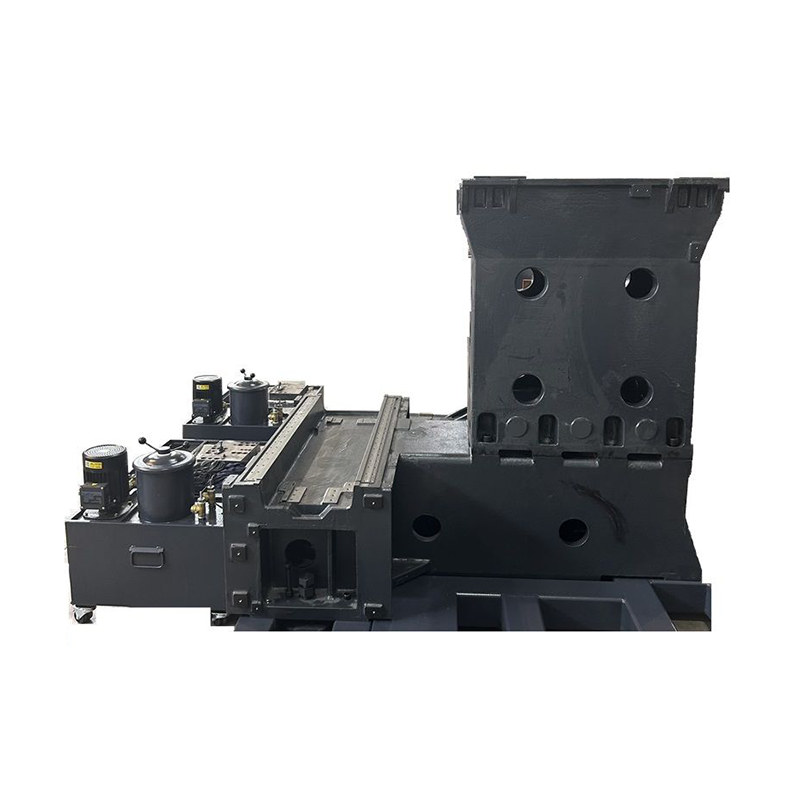
The operational workflow shifts significantly when implementing wire erosion. Tool makers harden the steel block—such as H13, D2, or S7 tool steels—before cutting the mold cavity. This sequence maintains strict accuracy. It eliminates the unpredictable warping, scaling, and dimensional shifting that occurs when heat treating traditionally machined parts. The final cut is exactly the final dimension, requiring no compensation for thermal expansion.
Consider a progressive stamping die. If you mill the die block in an annealed state and then send it to the heat treater, the block will move. Holes will shift out of location. Edges will warp. You must leave grinding allowance and spend hours hard-milling or jig grinding the block back into tolerance. Wire erosion eliminates this entire secondary correction loop. You harden the blank block, drill your start holes, and wire cut the final geometry to print.
Advanced wire erosion systems achieve tolerances as tight as +/- 0.0001 inches (0.0025 mm). The technology excels at cutting sharp, near-zero-radius inside corners dictated by the wire's radius, which is typically between 0.10 mm and 0.30 mm. It easily produces intricate tapers, high-aspect-ratio slots, and complex splines that are physically impossible to reach with rotating end mills.
When designing extrusion dies for aluminum profiles, engineers require complex internal geometries with varying draft angles. A standard end mill cannot machine a sharp internal corner; it always leaves a radius equal to the tool. Wire erosion cuts these profiles precisely. The upper and lower guides move independently, allowing the machine to cut a square on the top of the block and a circle on the bottom simultaneously.
Multi-pass Brass Wire EDM achieves exceptional surface roughness average (Ra) values. By executing a roughing pass followed by several low-power skim passes, the process leaves a uniform, matte finish. This capability yields substantial labor and time savings by eliminating manual benchwork, hand-polishing, or grinding. Removing manual intervention prevents human error and protects the dimensional integrity of critical mold components.
A typical cutting sequence involves one rough cut to drop the slug, followed by two to four skim cuts. The rough cut uses high amperage to remove material quickly, leaving a rough surface and a small amount of recast layer. The subsequent skim cuts use reversed polarity and low energy to shave off microns of material, removing the recast layer and refining the surface finish down to 0.1 µm Ra. This finish often meets the requirements for plastic injection molds straight off the machine.
Equipment configurations generally fall into non-submerged and fully submerged environments. Non-submerged machines rely on coaxial flushing, where nozzles direct water streams at the cut zone. Fully submerged systems place the entire workpiece underwater inside a sealed work tank, offering distinct operational advantages for complex components.
Feature | Non-Submerged (Coaxial) | Fully Submerged |
|---|---|---|
Thermal Stability | Variable, depends on ambient room temp. | Excellent, water acts as a thermal sink. |
Flushing Efficiency | Poor on thick parts, water deflects. | Superior, uniform pressure through the kerf. |
Taper Cutting | Difficult, nozzles collide with part. | Ideal, no nozzle interference. |
Wire Breakage | Higher risk due to trapped debris. | Lower risk, debris floats away. |
A Submerge Processing Brass Wire EDM Machine maintains a constant, regulated temperature across the entire workpiece. The surrounding dielectric fluid acts as a massive thermal sink. This prevents microscopic thermal expansion during long, unattended cutting cycles, ensuring the first millimeter of the cut aligns perfectly with the last.
Temperature fluctuations in a machine shop destroy precision. A one-degree Celsius change in a 500mm steel block causes significant thermal expansion. When a cut takes 40 hours to complete, the ambient temperature will shift. Submerging the part in a temperature-controlled water bath locks the material dimensionally. The chiller unit maintains the water temperature to within 0.1 degrees, guaranteeing absolute stability from Monday morning to Wednesday afternoon.
Full submersion drastically improves the flow of dielectric fluid through deep cuts. When machining thick mold bases, gravity and water pressure work together to evacuate eroded particles from the kerf. This prevents secondary sparking caused by trapped debris, which can pit the workpiece surface or cause catastrophic wire breakage.
In a non-submerged setup, high-pressure water nozzles must seal against the top and bottom of the workpiece. If the part has stepped features or intersecting holes, the water pressure escapes, and flushing fails. The wire breaks immediately. A submerged tank eliminates this problem. The water surrounds the part completely, ensuring consistent dielectric conditions regardless of the part's external geometry.
Submerged processing stabilizes the wire during high-angle taper cuts required for mold draft angles and extrusion dies. The uniform fluid pressure minimizes wire vibration. Without the disruption of high-pressure flushing nozzles deflecting off angled surfaces, the wire maintains a truer path, resulting in superior geometric accuracy on complex drafts.
Assessing when to use standard brass versus premium wires depends on production volume and part complexity. Operators must evaluate cutting speed, surface finish requirements, and the physical demands of the workpiece geometry against the consumable budget. You do not run premium coated wire for a simple 2D punch block. You reserve it for challenging applications where standard wire fails.
Zinc-coated wires feature a brass or copper core surrounded by a layer of pure zinc. They cut faster and reduce wire breakage because the zinc coating vaporizes rapidly, cooling the wire and enhancing the spark gap flush. However, they come at a higher consumable cost. Standard brass is sufficient for standard mold bases and general precision cutting. Coated wire is required for exceptionally tall parts or applications with poor flushing conditions where standard wire would repeatedly break.
The economics dictate the choice. If a spool of coated wire costs 30% more but reduces cycle time by 15%, the shop must calculate the machine burden rate to determine profitability. For lights-out manufacturing where reliability is paramount, coated wire provides insurance against broken wires stopping the machine at 2:00 AM.
Molybdenum and tungsten wires offer extreme tensile strength. Manufacturers use them for extreme micro-machining or medical device production where wire diameters drop below 0.05 mm. These alternatives present severe cost trade-offs. Brass remains the default for the vast majority of general mold and metal part cutting because it delivers the necessary precision without the exorbitant expense of refractory metals.
Adopting wire erosion technology requires understanding its operational realities. Facilities must plan for specific environmental controls, consumable management, and workflow adjustments to maximize machine uptime and return on investment. You cannot place an EDM next to a grinding machine. The airborne dust will contaminate the linear guideways and the dielectric system.
Electrical discharge machining is inherently slower in material removal rate compared to rough milling. It is not designed to hog out massive volumes of steel quickly. Frame EDM as a finishing process or a solution for unattended, lights-out manufacturing. Running machines overnight offsets slow cycle times and maximizes throughput without adding labor hours.
Internal geometries require entry points. This incorporates the logistical need for fast-hole EDM drilling or CNC drilling to create entry holes. Engineering teams must add this step to the manufacturing routing sheet, ensuring start holes are placed accurately before the workpiece moves to the wire machine. Missing a start hole means the part goes back to the milling department, killing the production schedule.
The process continuously consumes brass wire. Because the electrical discharges erode the wire alongside the workpiece, it cannot be reused for cutting. Facilities must manage the logistics of wire spool replacement and scrap wire recycling. Operating costs also factor in the routine maintenance of dielectric fluid, replacing micron filters, and exchanging deionization resin beds to maintain water conductivity levels.
Monitor water conductivity daily to ensure stable spark generation.
Replace paper micron filters when backpressure exceeds manufacturer specifications.
Clean power feed contacts weekly to prevent voltage drops.
Calibrate wire tensioning systems monthly to avoid taper errors.
Wire erosion is strictly limited to electrically conductive materials. This includes all metals, graphite, and certain conductive ceramics. It completely disqualifies standard plastics, composites, or non-conductive ceramics, requiring shops to rely on traditional cutting methods for those specific materials.
Implement these next steps to optimize your manufacturing workflow:
Audit current scrap rates related to heat-treatment distortion on traditionally milled parts.
Calculate the total labor hours spent on manual mold polishing and benchwork.
Request a test cut from an EDM vendor using your specific hardened material to verify surface finish capabilities.
Evaluate part geometries to identify features that can be consolidated into a single wire EDM setup.
A: Any electrically conductive material, including tool steels, titanium, aluminum, carbide, and exotic superalloys, regardless of their physical hardness.
A: It offers the best compromise between the high electrical conductivity of copper, the improved flushing/cooling characteristics provided by zinc, and high tensile strength, all at an economical price point.
A: Fully submerging the workpiece in dielectric fluid ensures uniform temperature control to prevent thermal expansion, and drastically improves debris flushing in thick or complex parts, reducing wire breakage.
A: A starter hole must first be drilled—often using a fast-hole EDM drill—allowing the brass wire to be threaded through the workpiece before the cutting cycle begins.
A: Yes, by utilizing multiple skim passes, Brass Wire EDM can achieve extremely fine surface finishes that often meet the requirements for injection mold cavities without manual polishing.
A: Depending on the machine, material thickness, and environmental controls, tolerances can be held to within +/- 0.0001 inches (0.0025 mm) or better.
A: No. EDM is a non-contact process. The wire never physically touches the workpiece; material is eroded by the electrical sparks jumping the microscopic gap between the wire and the part.
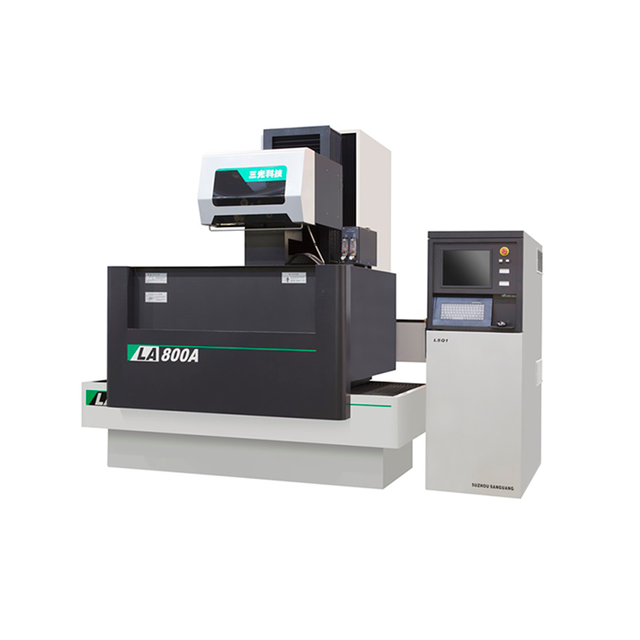


 HB400
HB400  HB600
HB600  HB800
HB800  LA350A
  LA500A
  LA800
LA800  EB450
EB450  EA500A
  EB650N
  DS703C
  SK450
SK450 


