
In high-precision manufacturing, achieving micro-tolerances on hardened, conductive metals often exceeds the physical limitations of conventional cutting tools. When machinists attempt to process exotic alloys or complex geometries using traditional milling and turning, they frequently encounter mechanical stress, thermal distortion, and rapid tool wear. These issues lead to high scrap rates and compromised structural integrity, forcing shops to seek alternative machining methods that bypass physical cutting forces entirely.
Brass Wire EDM (Electrical Discharge Machining) eliminates physical contact, utilizing controlled electrical sparks to erode material with extreme precision. Instead of shearing metal away with a carbide endmill, this process vaporizes it at the microscopic level. This guide breaks down the mechanics of the process, evaluates wire material trade-offs, and provides a framework for determining if this technology aligns with your production requirements on the shop floor.
Non-Contact Precision: Brass Wire EDM uses a continuously fed, electrically charged wire to slice through conductive materials without inducing mechanical stress or tool pressure.
Optimal Balance of Properties: Plain brass wire remains the industry standard due to its optimal combination of tensile strength, electrical conductivity, and flushability compared to pure copper or molybdenum.
Material Agnosticism: The process cuts any conductive material—including carbide, titanium, and Inconel—regardless of its hardness rating.
Cost vs. Speed Trade-offs: While highly accurate, the process is slower than conventional machining; evaluating a Brass Wire EDM Machine requires balancing wire consumption rates, cutting speed, and required surface finish (Ra).
Understanding the exact physical mechanism is critical for engineers determining if EDM can achieve their required surface integrity and dimensional accuracy. The process relies entirely on the principle of electrical discharge. High-frequency electrical pulses are generated between the wire electrode and the conductive workpiece. These pulses create localized melting and vaporization of the workpiece material, with temperatures reaching 8,000°C to 12,000°C in the microscopic cutting zone. Because the thermal event is highly localized and rapidly quenched, the bulk of the workpiece remains at room temperature, preventing massive thermal distortion.
The role of the continuously fed wire is central to this operation. The wire, typically measuring 0.10 mm to 0.30 mm in diameter, never actually touches the workpiece. Instead, it maintains a microscopic spark gap of 0.01 to 0.05 mm. This gap prevents tool distortion and mechanical pressure on the part. The wire must be continuously fed from a spool at a controlled speed. If the wire remained stationary, the intense heat of the sparks would quickly erode, thin, and snap the wire during the cut. Fresh wire is constantly introduced to the cutting zone to maintain a uniform diameter and consistent spark characteristics.
Precision wire guidance ensures the accuracy of the cut. High-precision upper and lower diamond wire guides stabilize the wire and maintain tight geometric tolerances. The independent movement of these guides along the U/V axes allows the machine to transition from standard 2D vertical profiles to complex 4-axis tapered cuts. This flexibility is essential for creating intricate shapes, extrusion dies, and angled surfaces that would be impossible to reach with a rotating cutting tool.
Dielectric fluid and flushing mechanisms play a vital role in the process. Deionized water is used as a dielectric medium to insulate the gap, concentrate the spark energy, and cool the cutting zone. Pressurized upper and lower flush nozzles are critical for removing microscopic eroded particles, known as swarf. Effective flushing prevents short circuits and minimizes the risk of wire breakage. If swarf builds up in the kerf, the spark will jump to the debris rather than the workpiece, degrading cutting efficiency and surface finish.
Workpiece Setup: The conductive material is clamped securely to the machine table and submerged in or flooded with deionized water.
Wire Threading: The brass wire is threaded through the upper diamond guide, down through the start hole in the workpiece, and into the lower guide.
Spark Generation: The generator applies rapid voltage pulses, ionizing the dielectric fluid and creating a plasma channel across the spark gap.
Material Erosion: The spark melts and vaporizes a microscopic crater in the workpiece.
Flushing: High-pressure deionized water blasts the vaporized metal (swarf) out of the kerf before it can fuse back onto the part.
Wire Advancement: The CNC controls advance the wire along the programmed toolpath while fresh wire is continuously spooled through the cutting zone.
Brass is not the only EDM wire, but it is the most common. Evaluating why brass is chosen and when alternatives are necessary helps optimize cutting performance. The metallurgical advantage of brass lies in its alloy composition, typically 63% copper for conductivity and 37% zinc for vaporization properties. The zinc content cools the wire through vaporization, improving cutting speed and stability over pure copper wires. Copper alone has excellent conductivity but poor tensile strength and flushability, making it prone to breaking under tension.
Plain brass is widely used for general-purpose, economical cutting. It provides a reliable baseline for most tool room applications. However, zinc-coated and stratified brass wires offer enhanced performance for demanding production runs. These wires feature a high-purity brass core that is electroplated or diffusion-annealed with a zinc-rich outer layer. This construction enhances spark stability and heat dissipation. Coated brass wires can deliver up to 20-30% higher cutting speeds and better surface finishes, though they come at a higher consumable cost. The zinc coating vaporizes first, absorbing heat and protecting the core wire from thermal degradation.
When comparing brass to molybdenum and tungsten, the trade-offs become clear. Brass offers better flushability and speed for standard applications. Molybdenum and tungsten are reserved for specialized micro-machining tasks requiring extreme tensile strength to prevent wire deflection during intricate cuts. These refractory metals can be drawn to much finer diameters (down to 0.02 mm) for cutting microscopic features, but they cut significantly slower than brass and are much more difficult to handle.
Wire Material | Primary Composition | Key Advantages | Typical Applications |
|---|---|---|---|
Plain Brass | 63% Copper, 37% Zinc | Excellent balance of speed, strength, and economy. | General-purpose machining, tool and die making, standard tolerances. |
Zinc-Coated Brass | Brass core with Zinc outer layer | 20-30% faster cutting speeds, superior surface finish, reduced wire breakage. | High-volume production, tall workpieces, poor flushing conditions. |
Molybdenum / Tungsten | Pure Molybdenum or Tungsten | Extreme tensile strength, allows for ultra-fine wire diameters without deflection. | Micro-machining, medical devices, ultra-precision electronics components. |
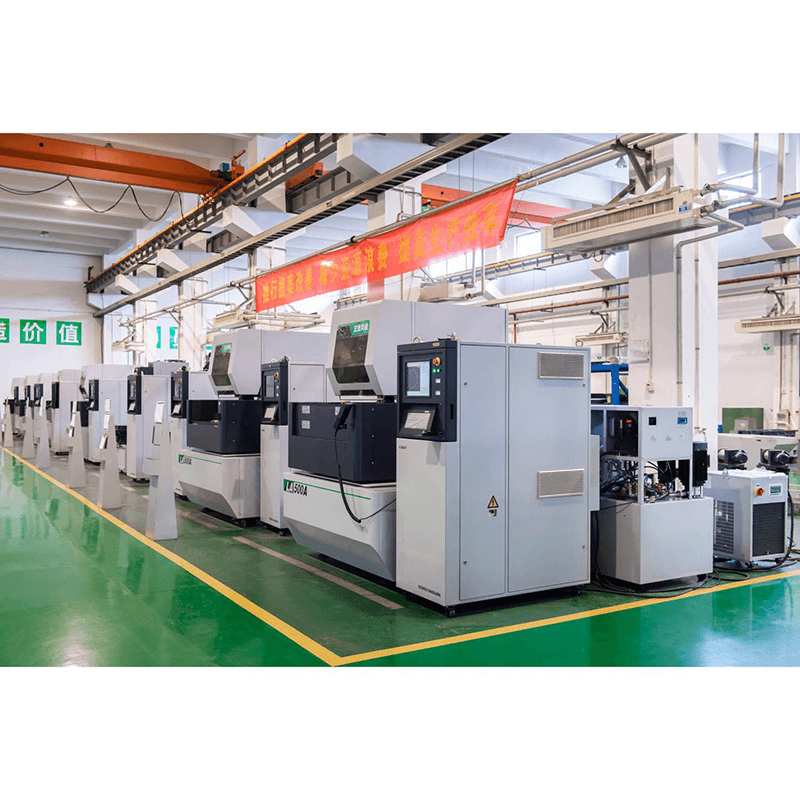
Procurement managers and manufacturing leads must evaluate several criteria when deciding whether to bring EDM capabilities in-house. Core components and automation capabilities are major factors. Rigid machine castings, precision linear glass scales, and automated wire threading (AWT) are essential for achieving high accuracy and enabling lights-out manufacturing. A robust AWT system allows the machine to automatically re-thread the wire if it breaks or when moving between multiple internal cutouts, drastically reducing operator intervention.
Power supply and generator specifications directly impact the quality of the cut. Modern anti-electrolysis generators prevent cobalt depletion in carbide and titanium oxidation. When cutting tungsten carbide with older generators, the electrolytic action of the water can leach the cobalt binder, leaving a weakened, powdery surface. Advanced generators use alternating current (AC) or highly modified pulse shapes to eliminate this effect. Adaptive control systems automatically adjust spark frequency and wire tension in real-time. These systems monitor the spark gap conditions and throttle the power back if they detect poor flushing or an impending short circuit, preventing wire breakage when cutting through varying material thicknesses or stepped parts.
Operating costs and consumables must be factored into the daily running of the equipment. A Brass Wire EDM Machine requires ongoing operational supplies. You must account for brass wire consumption based on spool feed rates per hour, deionized water resin replacement to maintain proper fluid conductivity, dielectric filter maintenance to remove microscopic swarf, and the electricity usage required to run the high-frequency generator and chiller units.
Defining exactly what can and cannot be achieved with this process ensures realistic production planning. Machining pre-hardened and exotic metals is a primary strength of EDM. The process easily cuts D2 tool steel, Inconel 718, Hastelloy, and tungsten carbide post-heat treatment. This capability eliminates the risk of warping associated with secondary hardening processes. You can machine the part in its fully hardened state, ensuring the final dimensions remain exactly as cut without the unpredictable distortion caused by quenching and tempering.
Geometric capabilities include complex 2D profiles, sharp internal corners limited only by the wire radius, and 4-axis independent cutting for tapers and transitional shapes. For example, you can program a square shape on the bottom of the part that smoothly transitions into a circle on the top. This is heavily utilized in extrusion die manufacturing.
Hardened Tool Steels: Cut punch and die components without annealing and re-hardening.
Aerospace Alloys: Process titanium and Inconel without inducing work-hardening or rapid tool wear.
Medical Grade Stainless: Achieve burr-free cuts on delicate surgical instruments.
Conductive Ceramics: Machine specialized carbide blends used in high-wear applications.
However, there are limitations. The process cannot cut blind holes; the wire must pass entirely through the workpiece. It also cannot cut non-conductive materials such as standard ceramics, plastics, or composites, as the electrical spark cannot form without a conductive path.
Understanding the challenges of adopting this technology is crucial for successful implementation on the shop floor. Cutting speed versus surface finish (Ra) is a primary consideration. Wire EDM is a slow process compared to high-speed CNC milling. Achieving single-digit micro-inch surface finishes requires multiple passes, typically one roughing cut followed by several skim cuts. The roughing cut removes the bulk of the material quickly but leaves a rough surface and a larger recast layer. The subsequent skim cuts use lower power settings and reverse directions to shave off microscopic amounts of material, refining the surface finish and improving dimensional accuracy. This requirement directly impacts production timelines and must be scheduled accordingly.
Recast layer mitigation is another critical factor. The recast, or white layer, is a metallurgical alteration at the cut edge caused by rapid heating and quenching. This layer is often brittle and can contain micro-cracks. For aerospace and medical applications, mitigation strategies are necessary to ensure compliance with strict fatigue-life standards. These strategies include utilizing specific low-energy generator settings during skim passes to minimize the depth of the recast layer, or applying secondary electro-polishing and abrasive flow machining to remove it entirely.
Wire breakage and downtime risks must be managed proactively. Common causes of wire breakage include poor flushing in deep cuts, inconsistent material density (such as inclusions or voids in the metal), and incorrect tension settings. Emphasizing proper parameter selection, using high-quality brass wire with consistent tensile strength, and performing routine maintenance of wire guides and power contacts will minimize these risks. If the power contacts become grooved or worn, electrical transfer becomes inefficient, leading to erratic sparking and inevitable wire failure.
Conduct a time-study analysis comparing your current hard-milling processes against the cycle times of wire EDM for your specific hardened components.
Request test cuts on your exact material grade from the machine manufacturer to verify achievable surface finish (Ra) and measure the resulting recast layer depth.
Evaluate your facility's floor space and climate control capabilities, as EDM machines require stable ambient temperatures and dedicated areas for dielectric fluid management.
Assess your operators' current skill sets and schedule dedicated training for EDM programming, focusing on 4-axis toolpaths and adaptive generator settings.
A: Standard diameters range from 0.10 mm (0.004") to 0.30 mm (0.012"), with 0.25 mm (0.010") being the most common for general-purpose machining.
A: No. The EDM process relies on electrical sparks, meaning the workpiece material must be electrically conductive.
A: Modern machines can routinely hold tolerances of ±0.0025 mm (±0.0001 inches) and achieve surface finishes as fine as 0.1 µm Ra, depending on the number of skim passes.
A: Deionized water provides a lower viscosity for superior flushing of microscopic swarf in the narrow wire kerf, and it acts as an effective semiconductor to control the spark gap.
A: No. The wire is separated from the workpiece by a microscopic gap maintained by the dielectric fluid and the machine's servo controls; material is removed purely by electrical erosion.
A: It is a microscopic layer of material on the cut surface that has been melted by the EDM sparks and rapidly cooled by the dielectric fluid, often requiring removal or minimization in high-stress aerospace or medical components.
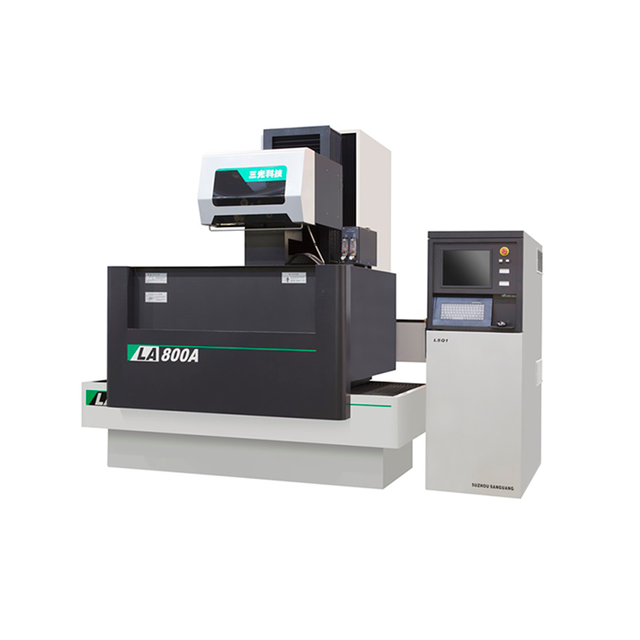


 HB400
HB400  HB600
HB600  HB800
HB800  LA350A
  LA500A
  LA800
LA800  EB450
EB450  EA500A
  EB650N
  DS703C
  SK450
SK450 


