
Views: 0 Author: Site Editor Publish Time: 2025-10-12 Origin: Site


Wire cutting EDM machine are revolutionizing precision manufacturing. But how deep can they cut? Understanding cutting depth is crucial for optimizing efficiency and accuracy. In this post, you'll learn about the factors that determine cutting depth in wire EDM, ensuring you make informed decisions for your projects.
When considering how deep wire EDM can cut, two main factors come into play: the machine’s travel range along the X, Y, and Z axes, and the load-bearing capacity of the workbench.
The travel range defines the maximum movement of the cutting wire in three dimensions:
● X-axis: Left to right movement.
● Y-axis: Front to back movement.
● Z-axis: Up and down movement, which directly limits the thickness of the workpiece the machine can cut.
For example, if a wire EDM machine has a Z-axis travel of 300mm, it means it can only cut through materials up to 300mm thick in one operation. If your part requires cutting through thicker material, the machine physically cannot reach deeper.
The workbench or table supports the workpiece during cutting. Each machine has a maximum load capacity it can safely handle without compromising performance or risking damage. If the workpiece exceeds this weight, the machine may struggle to maintain precision or even sustain mechanical issues.
Imagine trying to cut a large steel block that weighs more than the workbench can hold. The machine might vibrate or lose accuracy, resulting in poor surface finish or dimensional errors. In severe cases, this can cause machine breakdown.
Both factors must be considered together. A machine might have a large travel range but a limited load capacity, restricting the size and weight of parts you can process. Conversely, a machine with a strong load capacity but small travel range limits the dimensions of parts it can cut.
● Some machines allow cutting in sections or using special fixtures to handle larger parts beyond travel limits.
● The Z-axis travel also affects flushing efficiency during cutting, which impacts cut quality for thicker materials.
Understanding these parameters helps you select the right wire EDM machine for your project and avoid costly mistakes.
Wire EDM machines come in various types and sizes, each designed for specific cutting needs. Understanding the differences between medium-speed and slow-speed wire EDM machines helps you pick the right one for your project.
Medium-speed wire EDM machines balance cutting speed and cost-efficiency. They work well for many common applications, especially when moderate accuracy and size are acceptable. These machines typically have smaller travel ranges and lower load capacities compared to slow-speed models. They suit parts that don't require ultra-fine precision or extremely thick cuts.
Slow-speed wire EDM machines focus on high precision and can handle larger, heavier workpieces. Built with robust components, they offer greater stability and finer control over the cutting process. This makes them ideal for complex parts where tight tolerances matter. They also tend to have larger travel ranges, allowing thicker materials and bigger parts to be cut in one piece.
Wire EDM machines vary widely in their maximum cutting dimensions and load capacities:
Machine Type | X Travel (mm) | Y Travel (mm) | Z Travel (mm) | Max Workpiece Size (mm) | Max Load (kg) |
Small Medium-Speed | 300 | 400 | 200 | 600 × 400 × 200 | 300 |
Medium Medium-Speed | 400 | 500 | 300 | 800 × 600 × 300 | 500 |
Large Medium-Speed | 600 | 800 | 400 | 1000 × 800 × 400 | 800 |
High-End Slow-Speed | 600 | 400 | 400 | 1050 × 750 × 400 | 1000+ |
These figures are examples and can vary by manufacturer and model. For instance, a high-end slow-speed machine might handle heavier and thicker parts but at slower cutting speeds compared to medium-speed machines.
Choosing between these machines depends on your part size, weight, and precision needs:
● If you need faster turnaround and your parts are smaller or less complex, medium-speed machines can be cost-effective.
● For large, heavy, or precision-critical parts, slow-speed machines provide better control and quality.
● Some projects may require cutting in sections if the part exceeds machine travel limits.
Imagine cutting a steel mold insert 350mm thick. A medium-speed machine with a Z travel of 300mm can’t handle this in one go, but a slow-speed machine with 400mm Z travel can. However, the slow-speed machine may cut slower, increasing production time but ensuring accuracy.
Wire EDM is a powerful process, but it comes with practical limits and trade-offs, especially when cutting depth and part size increase.
While some machines list a large Z-axis travel, cutting very thick materials accurately is tough. Most wire EDM jobs fall between 300mm and 500mm thickness. Beyond this, several issues arise:
● Flushing challenges: Removing debris from the cut becomes harder as thickness grows. Poor flushing leads to rough surfaces and reduced accuracy.
● Wire deflection: The cutting wire may bend or wobble more in thick parts, causing less straight cuts.
● Longer processing times: Thicker parts require slower cutting to maintain quality, increasing production time significantly.
For example, cutting a 400mm thick steel block demands careful flushing and slower speeds to avoid wire breakage and maintain dimensional control.
As parts get bigger and thicker, maintaining tight tolerances becomes a balancing act:
● Larger workpieces may cause machine vibrations or thermal expansion, both harming precision.
● Slow-speed wire EDM machines offer better control and stability for big parts but cut slower.
● To keep accuracy, operators often reduce cutting speed and adjust cutting parameters, trading off throughput.
In practice, ultra-fine tolerances on very large parts are challenging. Sometimes, the part is cut in sections and later assembled to keep precision manageable.
The cutting range (X, Y, Z travel) defines the maximum cut per operation. However, parts can exceed these dimensions if:
● The part is cut in multiple sections.
● Only specific features need wire EDM, not the entire part.
This approach is common for large molds or automotive components, where wire EDM handles detailed features but not the full surface.
Factor | Effect on Wire EDM Cutting |
Increased thickness | More flushing trouble, wire deflection, slower cutting |
Larger part size | Harder to maintain tolerances, possible vibrations |
Higher accuracy demand | Requires slower cutting, better machine stability |
Cutting range limits | May need sectional cutting or alternate processes |
Understanding these trade-offs helps set realistic expectations for wire EDM projects. It ensures you balance size, accuracy, and cost effectively.
Tip: For thick or large parts, plan flushing carefully and consider sectional cutting to maintain accuracy and avoid wire breakage.
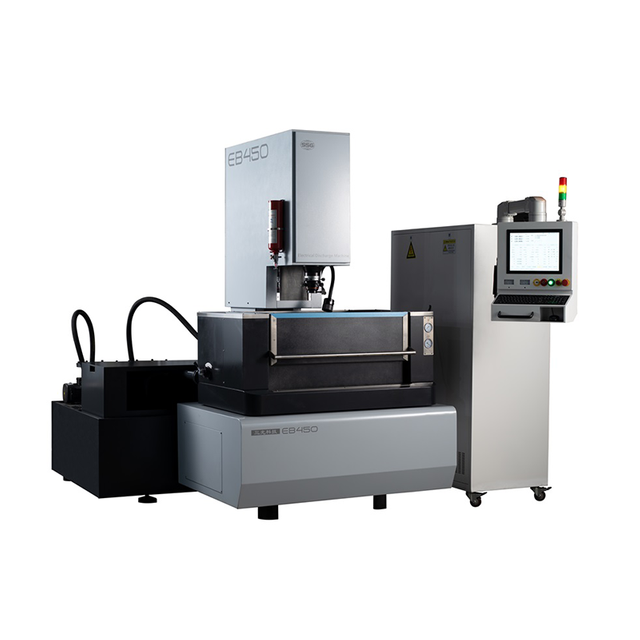
Wire EDM plays a crucial role in manufacturing large automotive parts, especially in creating precise mold components. However, it has limitations when it comes to cutting extensive surface areas on big molds.
In automotive production, molds shape parts like engine hoods, doors, and fenders. These molds require multiple components, including inserts, lifters, slides, and guide pin holes, all needing tight tolerances and complex geometries. Wire EDM excels at producing these features because it offers:
● High precision: It can cut intricate shapes with micron-level accuracy.
● Stress-free machining: It avoids mechanical forces that might distort delicate mold inserts.
● Capability with hard materials: It can cut hardened tool steels and exotic alloys used in molds.
For example, wire EDM cuts the profiles for trim steels in stamping dies. These trims must fit perfectly to ensure clean edges on stamped automotive panels. Wire EDM also produces mating parts and trimming dies, critical for assembling large molds.
Despite its precision, wire EDM isn't ideal for cutting the entire surface of large automotive molds. Reasons include:
● Size constraints: The machine's travel range limits the maximum mold thickness and footprint it can handle in one go.
● Surface complexity: Large curved or 3D surfaces require multi-axis machining, typically better handled by CNC milling.
● Cutting speed: Wire EDM is slower than milling for large areas, increasing production time and cost.
● Flushing challenges: Thick or large parts pose flushing difficulties, affecting cut quality and wire life.
As a result, manufacturers often use wire EDM for detailed mold components and CNC milling for the main mold surfaces. This combination balances precision and efficiency.
Wire EDM efficiency depends on several key factors that influence cutting speed, quality, and overall productivity. Two of the most critical elements are material conductivity and the wire size combined with the power supply.
Wire EDM relies on electrical discharges between the wire and the workpiece to erode material. Because of this, the material must conduct electricity. The better the conductivity, the more efficient the cutting process.
● High conductivity materials like copper and aluminum allow faster cutting speeds and smoother surfaces. The electrical discharges transfer energy more effectively, eroding material quickly.
● Low conductivity materials such as titanium and hardened steels require slower cutting. The sparks transfer less energy, which slows erosion and can reduce surface finish quality.
● Some exotic alloys or composite materials may need special settings or even alternative machining methods if conductivity is too low.
Understanding the material's conductivity helps optimize machine settings, like pulse duration and intensity, to balance speed and surface finish.
The size of the wire electrode directly affects cutting performance:
● Thinner wires (e.g., 0.1 mm) produce finer cuts with higher precision. They are ideal for intricate shapes or thin parts but wear out faster and cut more slowly.
● Thicker wires (e.g., 0.25 mm or more) allow faster cutting and better flushing of debris in thicker materials. However, they reduce precision and increase kerf width.
Choosing the right wire size involves balancing detail, cutting speed, and material thickness.
The power supply also plays a vital role. Higher power allows more intense discharges, increasing cutting speed and enabling thicker materials to be cut. However, too much power can cause wire breakage or poor surface finish.
Modern wire EDM machines feature adjustable power supplies and advanced controls to fine-tune these parameters for each job.
● Flushing pressure and dielectric fluid quality: Proper flushing removes debris and cools the cutting zone, preventing wire breakage and improving surface finish.
● Wire tension and feed rate: Correct tension keeps the wire straight, maintaining accuracy and reducing breakage risk.
● Machine stability and maintenance: Well-maintained machines with rigid frames reduce vibrations, improving cut quality and efficiency.
By carefully selecting wire size, adjusting power settings, and considering material properties, operators can maximize wire EDM efficiency, balancing speed, accuracy, and cost.
When deciding if wire EDM is the best choice for your project, it helps to compare it with other machining methods. Two big factors often come up: speed and cost, plus accuracy and surface finish.
Wire EDM is typically slower than traditional CNC milling or laser cutting, especially for large or thick parts. The process involves a thin wire eroding material bit by bit, which takes time. For example, cutting a thick steel block with wire EDM might take hours, while milling could be faster.
However, wire EDM shines when it comes to complex shapes and tight tolerances. It can cut intricate contours and sharp internal corners that milling tools can't reach easily. This precision reduces the need for secondary finishing, potentially saving time and money overall.
Cost-wise, wire EDM machines and their operation can be expensive. The wire electrode, dielectric fluid, and maintenance add to the price. But for parts requiring high precision or hard materials, wire EDM may offer better value by minimizing scrap and rework.
In contrast, milling or laser cutting might cost less upfront and run faster but could require additional finishing or tooling. So, the best choice depends on your part's complexity, size, and tolerance needs.
Wire EDM provides excellent accuracy, often within a few microns. This precision comes from the non-contact nature of the process—no cutting forces distort the part. It also achieves smooth surface finishes, sometimes eliminating polishing steps.
Other methods like milling can struggle with tool deflection and vibration, especially on thin or delicate parts, affecting accuracy. Laser cutting is fast but may leave heat-affected zones or rough edges needing extra work.
For example, in mold making or aerospace parts, wire EDM’s fine finish and tight tolerances make it invaluable. It cuts hardened steels and exotic alloys cleanly, which can be tough for traditional machining.
Wire EDM cutting depth is determined by the machine's travel range and workbench load capacity. Medium-speed machines balance speed and cost, while slow-speed models focus on precision. Wire EDM excels in cutting complex shapes with high accuracy but faces challenges with large parts due to flushing and wire deflection issues. Suzhou Sanguang offers advanced wire EDM solutions, ensuring precision and efficiency in manufacturing processes. As technology advances, wire EDM will continue to enhance cutting capabilities and production quality.
A: The maximum cutting depth of a wire cutting EDM machine is determined by its Z-axis travel range. If the machine has a Z-axis travel of 300mm, it can cut materials up to 300mm thick.
A: The load-bearing capacity affects wire cutting EDM machine performance by limiting the weight of the workpiece it can handle. Exceeding this capacity may lead to vibrations or mechanical issues, compromising precision.
A: A slow-speed wire cutting EDM machine offers higher precision and stability, making it ideal for complex parts requiring tight tolerances. It handles larger, heavier workpieces better than medium-speed machines.
A: Wire cutting EDM machines provide high precision and stress-free machining for automotive mold components. They excel at cutting intricate shapes and hard materials, essential for detailed features in large molds.
A: Material conductivity impacts wire cutting EDM machine efficiency by affecting cutting speed and surface quality. High conductivity materials like copper allow faster cutting, while low conductivity materials require slower processing.
 HB400
HB400  HB600
HB600  HB800
HB800  LA350A
  LA500A
  LA800
LA800  EB450
EB450  EA500A
  EB650N
  DS703C
  SK450
SK450 


