
Views: 0 Author: Site Editor Publish Time: 2025-12-26 Origin: Site


Electrical Discharge Machining (EDM) revolutionizes how we shape hard materials. But when it comes to choosing the right technique, how do you decide between Die Sinking EDM and Wire EDM?
In this article, we’ll explore the key differences between these two methods, highlighting their unique features and ideal applications. By the end, you’ll understand how to choose the right EDM technique for your manufacturing needs.
Die Sinking EDM, also known as Plunge EDM, is a process where a pre-shaped electrode is used to create cavities or molds in a workpiece. The electrode, typically made of materials like copper or graphite, is submerged in a dielectric fluid, and an electrical discharge occurs between the electrode and the workpiece. The spark generated from the discharge melts and vaporizes the material, allowing the electrode to sink into the material and create the desired cavity.
The Die Sinking EDM process is characterized by its use of a custom-shaped electrode that mirrors the shape of the desired cavity or feature in the workpiece. The electrode is lowered into the material, and the electrical discharge melts the material layer by layer, gradually creating the cavity. This process allows for precise shaping of deep and complex internal features that are difficult to achieve through traditional machining.
● Complex Geometry Creation: Die Sinking EDM is highly effective for creating complex internal shapes, such as cooling channels in molds or cavities in dies.
● Minimal Physical Stress: Unlike traditional cutting methods, Die Sinking EDM does not exert physical force on the material, minimizing the risk of deformation, especially in brittle materials.
● Versatility: It can be used on a wide variety of hard metals, including tool steels and titanium.
● Mold-making: The process is widely used in industries that require molds with complex internal features, such as injection molding for plastics.
● Tool Production: Used for making tools with intricate shapes and hard-to-machine features.
● Medical Instruments: Die Sinking EDM is also applied in the manufacturing of high-precision medical devices and components.
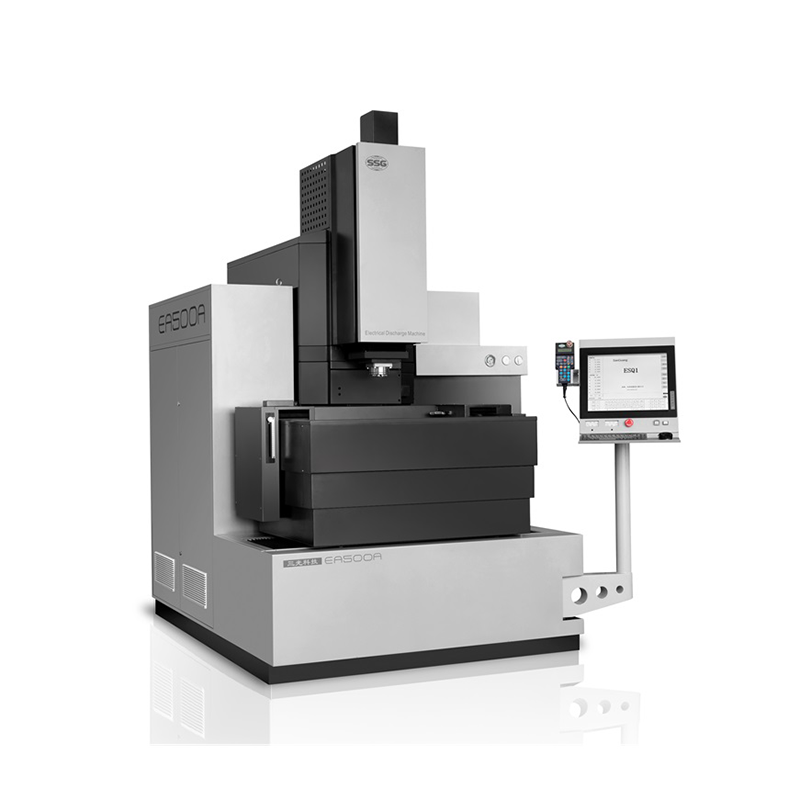
Wire EDM utilizes a thin, electrically charged wire to cut through a workpiece. The wire is continuously fed from a spool and moves through the material, removing it via electrical sparks. Unlike Die Sinking EDM, Wire EDM is typically used to cut external features and is especially effective for producing intricate external contours with high precision.
Wire EDM works by passing a thin wire, often made of brass or copper, through a workpiece submerged in dielectric fluid. The wire erodes material from the workpiece using electrical discharges. The machine is controlled through CNC (Computer Numerical Control) programming, enabling precise cuts and complex geometries.
● Precision: Wire EDM is capable of achieving very tight tolerances, making it ideal for applications requiring high accuracy.
● Fine Cuts: The thin wire allows for precise cutting of intricate shapes and delicate details.
● High Efficiency: It is efficient for cutting through hard materials and achieving clean, precise external cuts.
● Aerospace: Used for creating precision parts like turbine blades and brackets that require intricate details.
● Automotive: Ideal for making parts with tight tolerances such as brackets and gears.
● High-Precision Manufacturing: Wire EDM is widely used in industries requiring components with complex geometries, such as tooling and precision components.

Die Sinking EDM: Primarily used for creating deep cavities and internal features. It uses a custom electrode to shape the workpiece by sinking the electrode into the material.
Wire EDM: Focuses on cutting external features. The wire moves through the workpiece, cutting it along intricate, predefined paths.
Die Sinking EDM: Can achieve high-quality finishes, though additional post-processing may be required to improve surface quality.
Wire EDM: Provides excellent surface finishes with tight tolerances, often requiring little to no post-processing.
Die Sinking EDM: Ideal for 3D shapes and molds, capable of handling more complex features, including deep cavities.
Wire EDM: Best suited for 2D shapes but excels at cutting intricate external geometries with precision.
Die Sinking EDM: The process is slower due to the need for custom electrode creation and setup. It’s more time-consuming, especially for small production runs.
Wire EDM: Faster in producing cuts, especially for thinner materials. It is more efficient for high-volume production of simple external shapes.
Key Feature | Die Sinking EDM | Wire EDM |
Type of Cut | Creates deep cavities and internal features | Cuts external features along intricate paths |
Surface Finish & Precision | High-quality finishes, requires post-processing | Excellent finishes with tight tolerances |
Flexibility & Complexity | Ideal for 3D shapes and complex features | Best for 2D shapes, intricate external cuts |
Speed & Efficiency | Slower, especially for small runs | Faster, more efficient for high-volume production |
Die Sinking EDM is best suited for hard metals and complex internal shapes. It works effectively with materials that are difficult to machine using traditional methods, such as hardened steels, titanium, and other tough alloys. The process also minimizes stress on the material, reducing the risk of deformation.
Wire EDM is ideal for cutting through hard materials like tool steels and titanium, making it a versatile method for precision cutting. It is particularly effective when high accuracy is required for external features, especially when the material can withstand the spark-erosion process.
Material Suitability | Die Sinking EDM | Wire EDM |
Ideal Materials | Hard metals, complex internal shapes | Hard metals like tool steels and titanium |
Best for | Materials difficult to machine with traditional methods | External features requiring high precision |
Material Performance | Minimizes stress, reduces risk of deformation | Effective for spark-erosion in tough materials |
Die Sinking EDM: Typically involves higher initial costs due to the custom creation of electrodes for each new design. These setup costs can be significant, especially for one-off or small-batch production runs.
Wire EDM: Generally has lower initial setup costs, as it uses a consumable wire that is easier and cheaper to replace. However, operational costs can increase for larger volumes of parts due to material waste and wire consumption.
Wire EDM: More efficient for high-volume production, as it maintains high precision with minimal waste. It is a cost-effective choice for producing large quantities of components with tight tolerances.
Die Sinking EDM: Although slower, it is more cost-effective for producing complex, low-volume parts or one-off components, especially when intricate internal features are required.
Cost Considerations | Die Sinking EDM | Wire EDM |
Initial Setup & Tooling Costs | Higher due to custom electrode creation | Lower setup costs, uses consumable wire |
Operational Costs & Efficiency | More cost-effective for low-volume, complex parts | More efficient for high-volume production |
When choosing between Die Sinking EDM and Wire EDM, consider the complexity of the part, material, precision needs, and production volume. If your project involves deep cavities or complex internal features, Die Sinking EDM may be the best choice. For precise external cuts with high tolerance requirements, Wire EDM is more suitable.
● Aerospace and Automotive: Wire EDM is often preferred due to its precision and ability to handle high-volume production of intricate parts.
● Mold-Making: Die Sinking EDM is indispensable for creating molds with complex internal features, such as cooling channels or undercuts.
In summary, Die Sinking EDM and Wire EDM are both essential in precision machining. Die Sinking EDM excels in creating deep cavities and complex internal features, ideal for mold-making. Wire EDM is best for cutting precise external shapes with tight tolerances. The right choice depends on your project’s material, complexity, and production needs. Suzhou Sanguang Science & Technology Co., Ltd. offers high-quality EDM solutions that enhance manufacturing efficiency, helping businesses achieve superior product quality with advanced machining techniques.
A: Die Sinking EDM is a machining process that uses a pre-shaped electrode to create deep cavities and intricate internal features in a workpiece.
A: Die Sinking EDM is used for creating internal features and deep cavities, while Wire EDM is better for cutting precise external shapes with tight tolerances.
A: Die Sinking EDM excels in creating complex internal features, such as cooling channels in molds, without physical stress on the material, making it ideal for mold-making.
A: Wire EDM is best for cutting external shapes with tight tolerances, especially in high-precision manufacturing like aerospace and automotive components.
A: Wire EDM uses a thin, electrically charged wire that continuously feeds through the material, removing it via electrical discharges, allowing for intricate cuts.
A: Die Sinking EDM can have higher initial costs due to custom electrode creation but is more cost-effective for low-volume, complex parts requiring internal features.
 HB400
HB400  HB600
HB600  HB800
HB800  LA350A
  LA500A
  LA800
LA800  EB450
EB450  EA500A
  EB650N
  DS703C
  SK450
SK450 


