


Die sinking EDM (Electrical Discharge Machining) is a precise and powerful technique used in manufacturing to shape materials with extreme detail and accuracy. This method is essential in industries that require intricate parts and molds.
In this article, we will explore what a die sinker is, how Die Sinking EDM works, its advantages and disadvantages, and its various applications. We’ll also discuss key factors to consider when choosing the right machine for your needs.
A die sinker is a specialized machine used in Electrical Discharge Machining (EDM) that shapes a workpiece by eroding material with electrical discharges. The process is often used for creating cavities, molds, and intricate features that are difficult to produce with conventional cutting methods.
Die Sinking EDM is typically used when high precision and complex geometries are required. It operates by using a specially designed electrode, usually made from graphite or copper, to create electrical sparks that erode the material. The machine is particularly useful in industries such as aerospace, automotive, and tool manufacturing.
The die sinking EDM process begins when an electrode is precisely positioned near the workpiece. The electrode is submerged in dielectric fluid, which acts as a coolant and insulator. As electrical sparks are generated between the electrode and the workpiece, they cause tiny particles of the material to be eroded away. This controlled erosion allows for the creation of detailed shapes and features.
The process involves several stages:
● The electrode is moved closer to the material until the spark begins.
● Electrical discharges create heat and erode the material.
● The dielectric fluid cools the electrode and workpiece while flushing away debris.
There are several types of EDM machines, including Wire EDM and Die Sinking EDM. While both use electrical discharges to erode material, the methods and applications differ:
Die Sinking EDM: Primarily used for creating cavities, molds, and complex shapes that require high precision. It works by using a stationary electrode that sinks into the material.
Wire EDM: Utilizes a continuous wire as the electrode, ideal for making parts with straight edges or intricate contours.
Feature | Die Sinking EDM | Wire EDM |
Electrode Type | Stationary electrode | Continuous wire electrode |
Application | Molds, cavities, complex shapes | Straight edges, contours |
Key Differences:
● Die Sinking EDM is used for creating complex, deep cavities, while Wire EDM is more suited for cutting intricate contours or delicate shapes.
● Die Sinking EDM typically handles harder materials like tool steels and carbide, whereas Wire EDM is often used for lighter materials like copper or brass.
In Die Sinking EDM, the electrode material plays a crucial role in shaping the workpiece. Typically, electrodes are made of graphite or copper, both of which have high conductivity and wear resistance. The material choice affects the machining quality and efficiency.
Graphite electrodes are often preferred for high-speed cutting due to their excellent wear resistance and easy machinability.
Copper electrodes provide excellent detail and are ideal for creating fine features.
The design of the electrode must match the shape of the cavity or feature to be created. The electrode is precision-machined to ensure accurate results.
Material | Advantages |
Graphite | High wear resistance, easy machinability |
Copper | Excellent detail, ideal for fine features |
Dielectric fluid is a key component in Die Sinking EDM. This fluid serves multiple purposes:
● Cooling: It helps dissipate the heat generated by the electrical sparks.
● Insulation: Prevents continuous electrical discharges, ensuring sparks only occur at the right moment.
● Debris Removal: It flushes away the eroded material, keeping the area clean and reducing contamination.
Proper fluid management is essential for maintaining accuracy and preventing overheating.
The principle of Die Sinking EDM lies in the use of electrical sparks to erode the material. When the electrode approaches the workpiece, the voltage is increased until the dielectric fluid breaks down, allowing a spark to jump from the electrode to the material. This spark can reach temperatures up to 12,000°C, which melts the material and removes small particles from the workpiece.
As this process repeats, the electrode gradually sinks into the material, creating the desired shape. The ability to control the spark duration and intensity allows for fine detail and high precision.
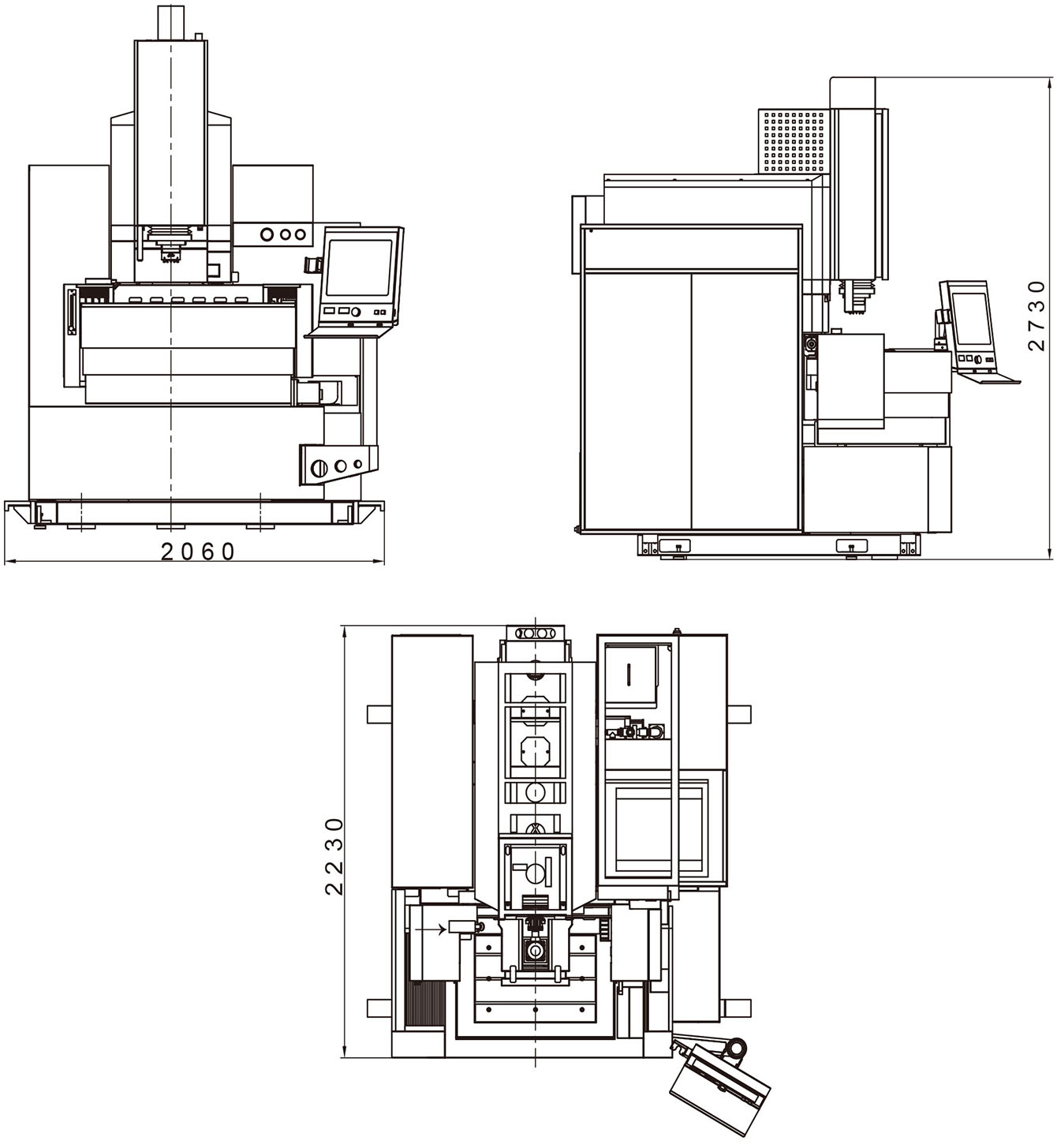
One of the primary advantages of Die Sinking EDM is its high precision. The process can achieve tolerances as low as ±0.004 mm, allowing for the creation of extremely fine details in molds and components. This level of accuracy is essential in industries like aerospace and medical device manufacturing, where even the slightest deviation can affect performance.
The use of CNC (Computer Numerical Control) systems ensures that the electrode is positioned and moved with utmost accuracy, allowing for consistent and repeatable results.
Die Sinking EDM excels at creating complex shapes that would be impossible or time-consuming to produce using traditional machining methods. It is particularly useful for making parts with deep cavities, sharp corners, and other intricate details. This capability makes it indispensable in mold-making, tooling, and the creation of specialized components.
Unlike traditional cutting methods, Die Sinking EDM is a non-contact process, meaning there is no physical wear on the tools. The electrodes are gradually worn down by the spark erosion, but this wear is predictable and uniform. This results in longer tool life and consistent performance over time.
Since Die Sinking EDM does not involve physical cutting forces, it minimizes the risk of workpiece deformation or distortion, especially for delicate or thin-walled parts. This makes it an ideal choice for manufacturing components that need to maintain their structural integrity, even under high precision demands.
Advantage | Description |
High Precision | Tolerances as low as ±0.004 mm |
Complex Shapes and Features | Creates intricate shapes and deep cavities |
Minimal Tool Wear | Non-contact process reduces tool wear |
No Cutting Forces | Reduces risk of workpiece deformation |
Die Sinking EDM is generally slower than other machining methods like CNC milling. The process removes material at a slower rate, which can increase production times, especially for large parts or high-volume runs. However, this can be mitigated by pre-machining parts to reduce the amount of material that needs to be removed.
Due to the high energy consumption of spark erosion and the need for frequent electrode replacements, the operating costs of Die Sinking EDM are higher compared to traditional machining methods. The cost of dielectric fluid and regular maintenance also adds to the overall expenses.
Another limitation of Die Sinking EDM is that it can only be used on conductive materials. Metals like steel, copper, and aluminum are ideal, but non-conductive materials such as plastics or ceramics cannot be machined with this method.
Disadvantage | Description |
Slow Production Speed | Slower than other methods, especially for large parts |
High Operating Costs | High energy consumption and frequent electrode replacements |
Limited to Conductive Materials | Can only process conductive metals, not plastics or ceramics |
Die Sinking EDM is essential in mold-making, particularly for creating complex cavities in injection molds and stamping dies. This technique ensures that the molds are accurate and capable of producing high-quality parts in industries like automotive, aerospace, and consumer goods.
Die Sinking EDM is used to produce intricate components that require deep features, sharp corners, and fine details. Examples include turbine blades, gear cutting tools, and medical implants.
In industries like medical device manufacturing and aerospace, precision is paramount. Die Sinking EDM is frequently used to create components like surgical instruments, implants, and parts for aircraft engines, where complex geometries and high reliability are critical.
When selecting a Die Sinker EDM machine, it's important to consider a few key factors to ensure that the machine meets your specific production needs. These factors will influence the machine's performance and suitability for your operations.
Factor | Considerations |
Production Scale | One-off parts or high-volume runs |
Material Types | Compatibility with materials you plan to use |
Complexity of Parts | Precision and detail needed for your applications |
Die Sinking EDM is a precise machining method used to create complex shapes in conductive materials. Its ability to produce fine details, maintain tool longevity, and prevent deformation makes it vital for industries like mold-making, aerospace, and medical devices. While the process is slow and costly, its accuracy and versatility make it invaluable for high-quality components.
Suzhou Sanguang Science & Technology Co., Ltd. offers advanced Die Sinking EDM machines, delivering precision and reliability to meet the demands of complex manufacturing needs.
A: Die Sinking EDM uses an electrode to create electrical sparks that erode material, producing precise shapes. The process is controlled with high accuracy through CNC systems.
A: Die Sinking EDM provides high precision, minimal tool wear, and can create complex shapes that other methods, like CNC milling, cannot achieve.
A: Die Sinking EDM is ideal for mold-making because it can create intricate and deep cavities with high precision, essential for producing high-quality molds.
A: Die Sinking EDM works on conductive materials such as steel, copper, and aluminum but cannot be used on non-conductive materials like plastics or ceramics.
A: Die Sinking EDM is slower because it removes material at a slower rate compared to methods like CNC milling, but it offers greater precision for complex designs.
 HB400
HB400  HB600
HB600  HB800
HB800  LA350A
  LA500A
  LA800
LA800  EB450
EB450  EA500A
  EB650N
  DS703C
  SK450
SK450 


