
Views: 0 Author: Site Editor Publish Time: 2025-12-31 Origin: Site


Die Sinking EDM (Electrical Discharge Machining) offers unparalleled precision by using electrical discharges to shape materials. In industries like aerospace and medical device manufacturing, precision is essential, and Die Sinking EDM provides the solution.
In this article, we’ll explore the key advantages of Die Sinking EDM and why it’s crucial for high-precision applications.
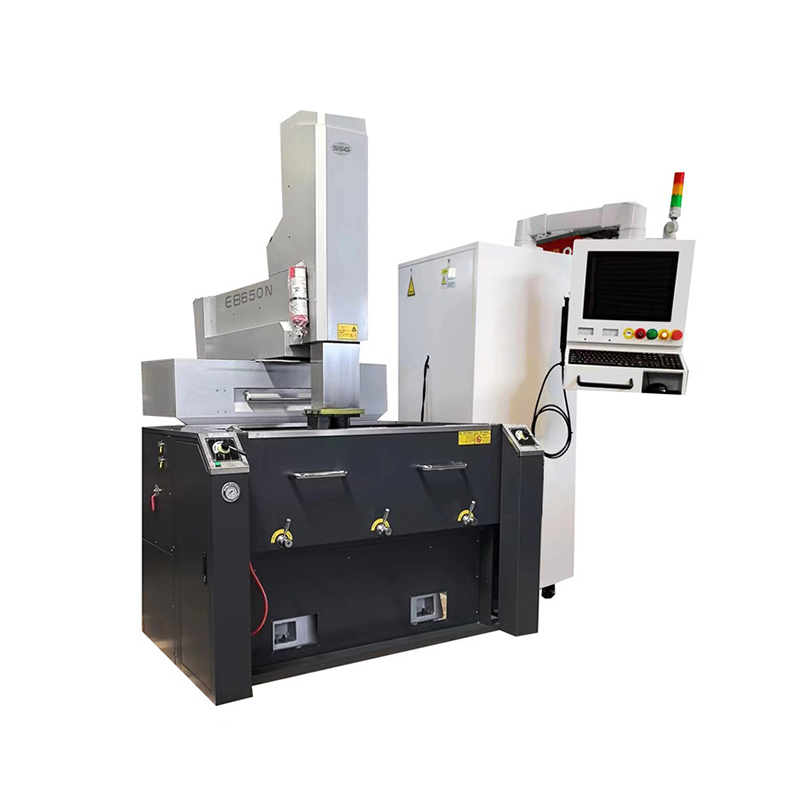
Die Sinking EDM works by creating electrical discharges between an electrode and the material being machined. The sparks created by these discharges heat the material to the point where it erodes away, allowing for extremely detailed and precise shapes to be created. Unlike traditional machining processes, where physical contact between the tool and the workpiece is necessary, Die Sinking EDM operates without direct contact. This is especially advantageous when working with delicate or hard materials that would otherwise be prone to damage from mechanical forces.
One of the most significant benefits of Die Sinking EDM is its ability to produce complex geometries with intricate internal features. This process is ideal for industries where precision and the ability to create detailed, high-performance parts are paramount.
Die Sinking EDM is extensively used across several industries, especially those that require high-precision manufacturing. In mold making, it is essential for producing molds used in injection molding, die casting, and other processes that require precision and durability. In the aerospace industry, parts like turbine blades, engine components, and various structural elements are often manufactured using Die Sinking EDM, ensuring they meet strict standards for accuracy and durability. Similarly, medical device manufacturing relies on this technology to produce implants, surgical tools, and other critical components where precision and material integrity are non-negotiable.
Industry | Application |
Mold Making | Injection molding, die casting, precision molds |
Aerospace | Turbine blades, engine components, structural parts |
Medical Manufacturing | Implants, surgical tools, critical medical components |
Die Sinking EDM is renowned for its ability to achieve incredibly tight tolerances. In industries like aerospace and medical device manufacturing, the smallest deviation in component dimensions can lead to failures or malfunctions. Die Sinking EDM can achieve tolerances as tight as 0.0001 inches (0.00254 mm), allowing manufacturers to create parts that are not only dimensionally accurate but also highly reliable. This level of precision ensures that components fit perfectly within assemblies, reducing the likelihood of failure in critical systems.
The high precision of Die Sinking EDM is a key reason why it is favored for applications where performance and safety are paramount. For instance, turbine blades in jet engines must withstand extreme conditions while maintaining strict dimensional accuracy. Die Sinking EDM provides the means to achieve such precision, ensuring both safety and efficiency in aerospace systems.
Another key advantage of Die Sinking EDM is its ability to maintain consistency across large production runs. Once the machining parameters are set, the process can reproduce the same intricate geometry across multiple parts with minimal variation. This consistency is particularly important in industries where identical components are needed in large quantities, such as in the automotive industry for engine parts or in medical manufacturing for surgical instruments.
Because Die Sinking EDM machines can be programmed to replicate complex shapes with high accuracy, they offer a level of automation that reduces the potential for human error. This makes it an ideal solution for mass production in fields that require both high quality and consistency.
One of the standout advantages of Die Sinking EDM is its ability to machine shapes that traditional cutting methods cannot achieve. Traditional machining methods are often limited in the types of geometries they can produce, especially when dealing with complex internal features or sharp internal corners. Die Sinking EDM, on the other hand, is not constrained by these limitations, making it ideal for creating parts with intricate internal geometries, fine cavities, and sharp edges.
For example, in mold-making industries, the ability to create detailed cavities that perfectly match the final part shape is essential. Die Sinking EDM can achieve these intricate shapes, ensuring that the mold can produce high-quality components consistently. Additionally, this ability to machine complex geometries makes Die Sinking EDM indispensable for producing tools that require precision in their functionality, such as dies for metal stamping.
Another advantage of Die Sinking EDM is its ability to create blind holes and holes at acute angles, features that conventional drilling techniques often cannot achieve. Die Sinking EDM can machine precise holes at angles that would be difficult, if not impossible, to achieve with other methods. This makes it ideal for applications where intricate hole patterns are required, such as in automotive engine components, aerospace parts, and medical implants.
Feature | Application Area |
Blind Holes | Mold-making, injection molding |
Acute Angles | Automotive engine parts, aerospace components |
Intricate Hole Patterns | Medical implants, precision aerospace parts |
These capabilities are especially useful in mold-making applications, where blind holes are often necessary for the injection molding process. Traditional methods struggle to produce these features with the necessary accuracy, but Die Sinking EDM can produce them with ease and precision.
Die Sinking EDM is a non-contact process, meaning there is no direct physical interaction between the electrode and the workpiece. This eliminates the mechanical forces that are common in traditional machining processes, which can cause deformation or damage, particularly to fragile or thin-walled parts. In medical device manufacturing, where parts like implants need to remain intact and undistorted, Die Sinking EDM ensures that these delicate components retain their strength and dimensional accuracy.
The absence of mechanical forces also reduces the risk of material fatigue and failure during the machining process. This is crucial in high-performance industries like aerospace, where even the smallest defect can compromise the structural integrity of a component.
Since no physical contact occurs during the machining process, Die Sinking EDM helps preserve the structural integrity of the workpiece. For materials that are prone to stress or cracking under mechanical loads, such as certain ceramics and brittle alloys, Die Sinking EDM offers a solution that avoids inducing harmful stresses. This makes it an excellent choice for machining fragile materials, ensuring that they remain strong and resistant to damage.
The precision and control offered by Die Sinking EDM result in exceptionally smooth surface finishes. Unlike traditional machining processes, which often require additional polishing or finishing, Die Sinking EDM produces a high-quality surface that can reduce or eliminate the need for post-processing. This saves both time and costs for manufacturers, especially in industries where surface quality is critical.
In aerospace, for example, the smoothness of engine components is vital to their performance, as surface imperfections can cause friction and heat buildup. Die Sinking EDM's ability to produce smooth finishes helps mitigate these issues, improving both the efficiency and longevity of the components.
The precision of Die Sinking EDM is especially advantageous when working on parts that require intricate details. Whether it’s creating small components for medical devices or fine detailing for aerospace parts, Die Sinking EDM provides the fine control needed to achieve the desired results. This level of detail is crucial in industries where both functional performance and aesthetics are important.
Die Sinking EDM is particularly well-suited for machining hard materials such as titanium, tungsten carbide, and hardened steel. These materials are widely used in industries that require high strength and durability, such as aerospace and medical device manufacturing. Traditional machining methods struggle to cut through these tough materials, but Die Sinking EDM can handle them with ease, allowing for the production of complex parts from some of the toughest materials available.
For example, turbine blades in jet engines are often made from titanium or other high-strength alloys. Die Sinking EDM allows for the precise machining of these components, ensuring they can withstand the extreme conditions they are subjected to during flight.
The versatility of Die Sinking EDM makes it essential in industries where high performance and material strength are crucial. Whether it’s creating engine components for the automotive industry, mold inserts for injection molding, or surgical instruments for the medical field, Die Sinking EDM offers the capability to work with a wide range of materials and produce parts that meet the highest standards of precision and quality.

While Die Sinking EDM offers many advantages, it is important to note that it is limited to machining electrically conductive materials. Non-conductive materials, such as plastics or ceramics, cannot be processed using this method. This limitation should be taken into account when considering Die Sinking EDM for a particular project.
● Tip: Always ensure that the material you plan to machine is electrically conductive. For non-conductive materials, explore other machining methods like laser cutting or water jet cutting.
The operational costs of Die Sinking EDM can be higher compared to traditional machining methods. This is due to factors such as high electricity consumption, the need for specialized electrodes, and the requirement for skilled operators. However, for high-precision and low-volume production, these costs can be justified by the superior quality and precision achieved.
● Tip: Die Sinking EDM is best suited for low-volume, high-precision production. For large-scale manufacturing, consider alternative methods that may offer a more cost-effective solution.
Limitation | Consideration |
Material Restrictions | Only works with conductive materials |
High Operational Costs | Higher due to electricity use, electrodes, and skilled labor |
Die Sinking EDM provides unmatched precision and versatility, essential for industries requiring high performance. Despite its high operational costs and material limitations, its benefits in precision and complex geometries make it invaluable in aerospace, automotive, and medical fields.
Suzhou Sanguang Science & Technology Co., Ltd. offers advanced Die Sinking EDM solutions, ensuring superior performance and high-quality results for demanding applications.
A: Die Sinking EDM is a non-contact machining process that uses electrical discharges to shape materials with high precision. It is ideal for creating complex geometries and intricate details.
A: Die Sinking EDM uses electrical sparks to erode material from the workpiece, allowing for precise machining without direct contact, which prevents mechanical stresses.
A: Die Sinking EDM offers unmatched precision, the ability to machine hard materials, and the creation of complex shapes with minimal mechanical forces, making it essential for high-performance industries.
A: Die Sinking EDM is widely used in aerospace, automotive, and medical device manufacturing, where high precision and complex parts are required.
A: Die Sinking EDM is typically more cost-effective for low-volume, high-precision production, as its operational costs are higher compared to traditional methods for large runs.
 HB400
HB400  HB600
HB600  HB800
HB800  LA350A
  LA500A
  LA800
LA800  EB450
EB450  EA500A
  EB650N
  DS703C
  SK450
SK450 


